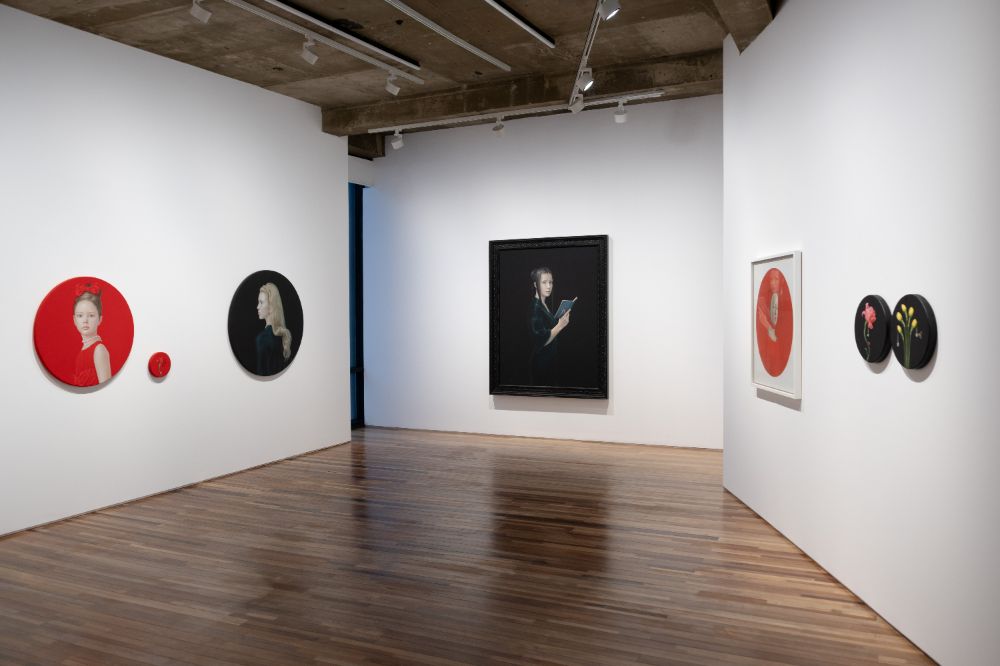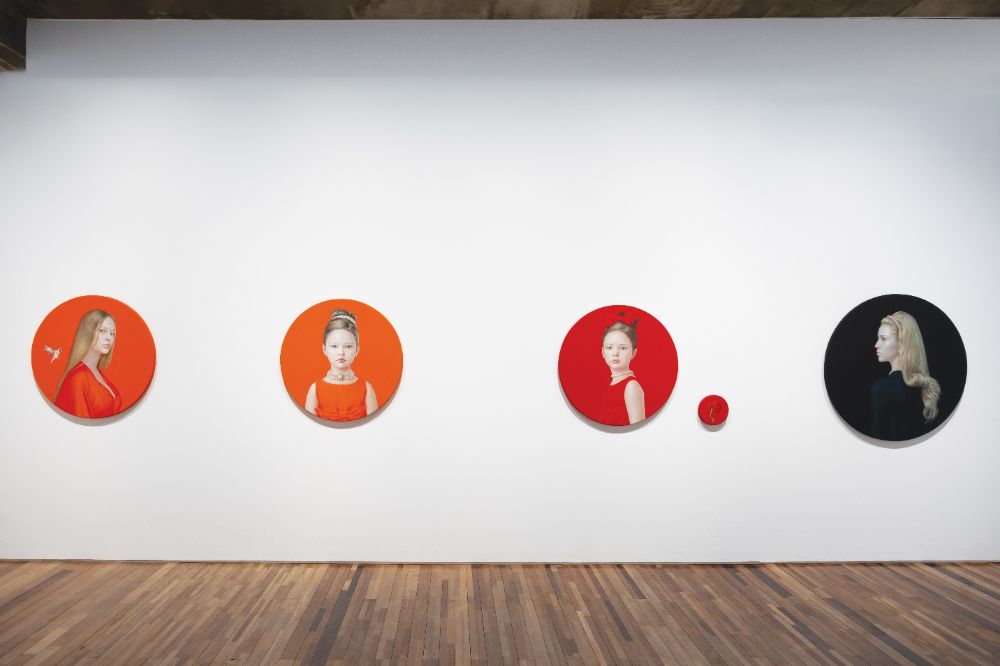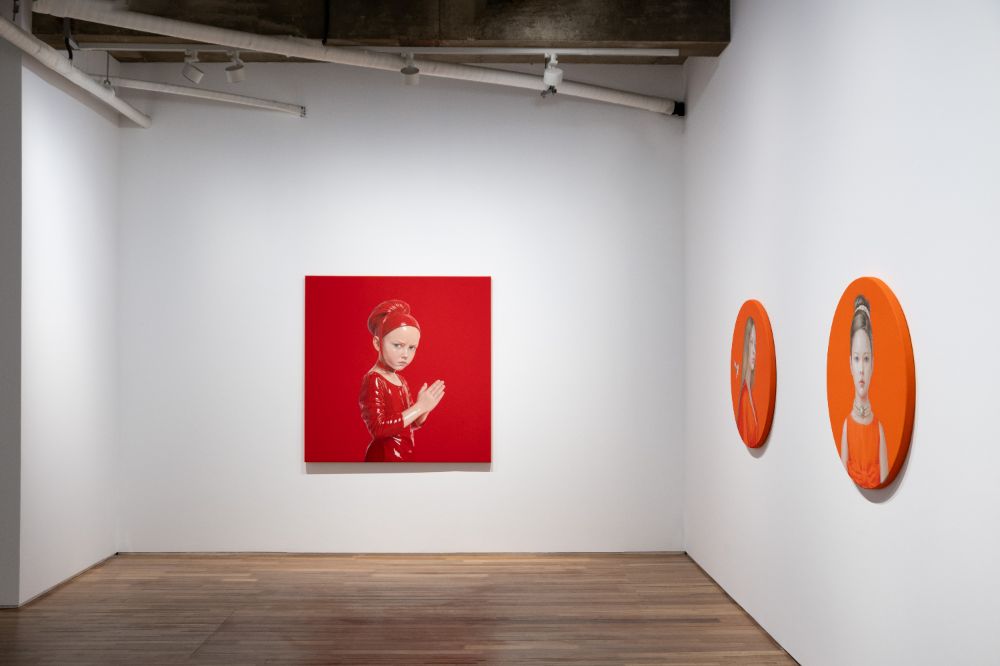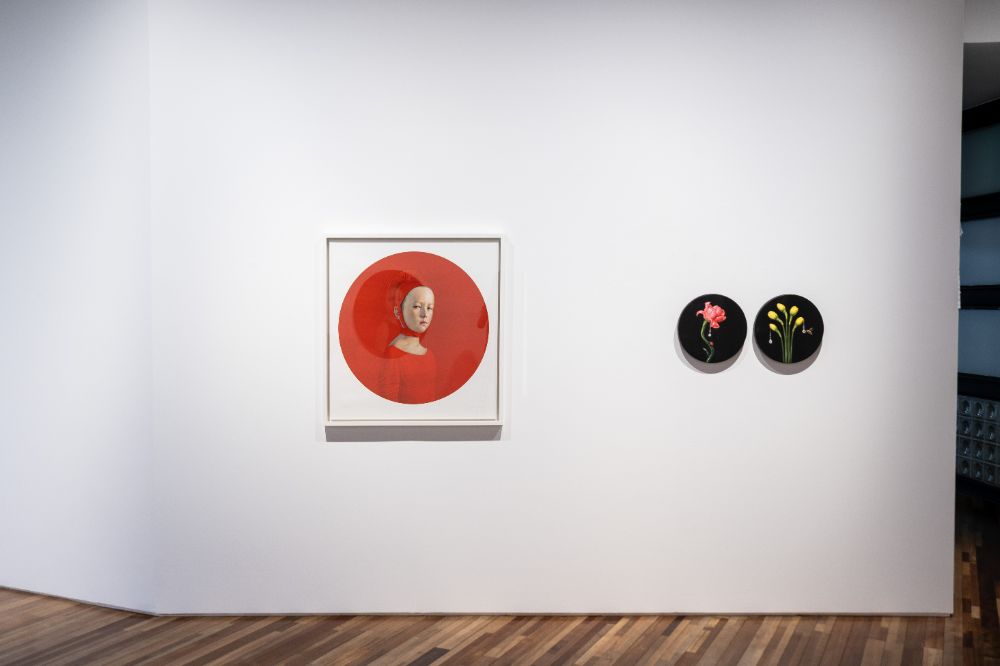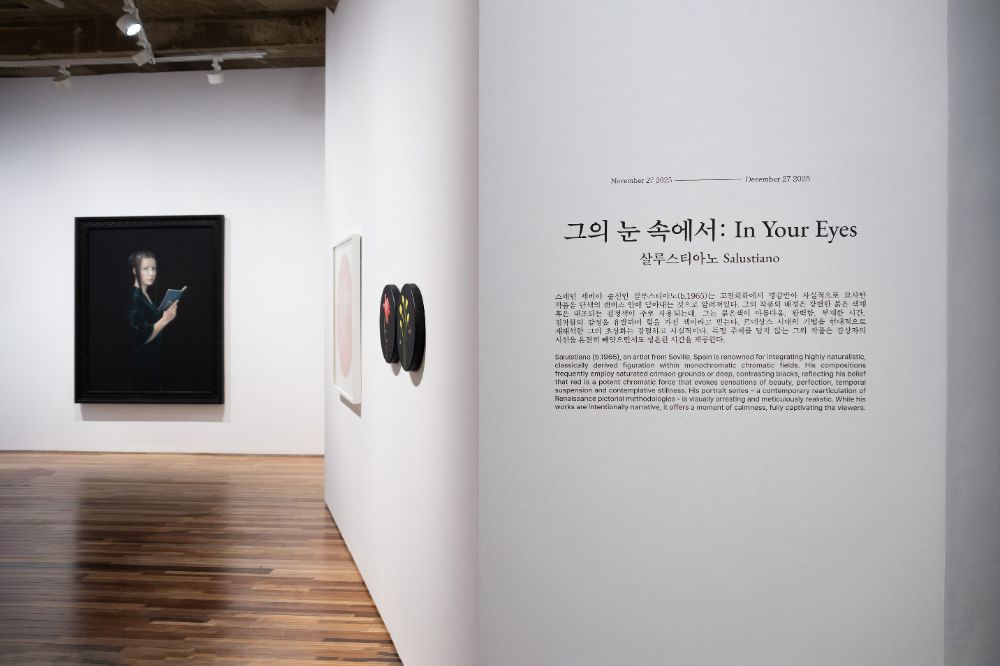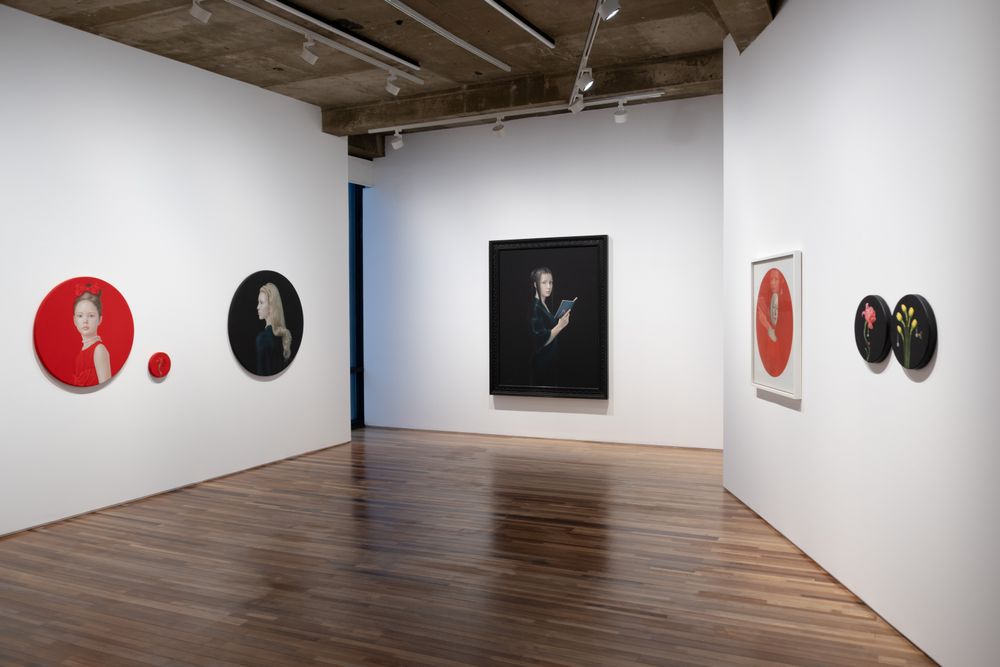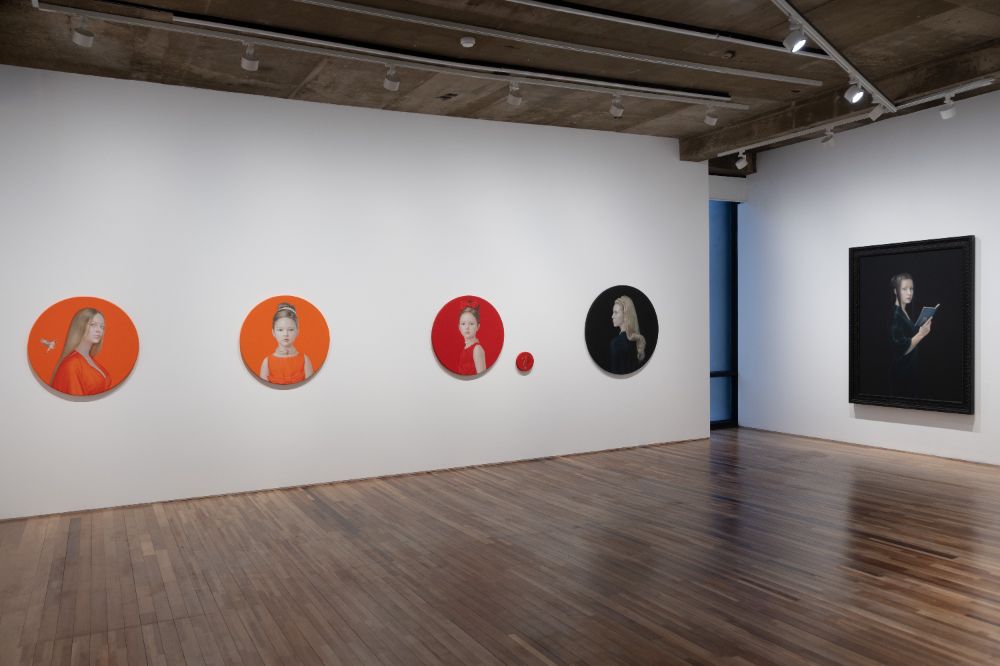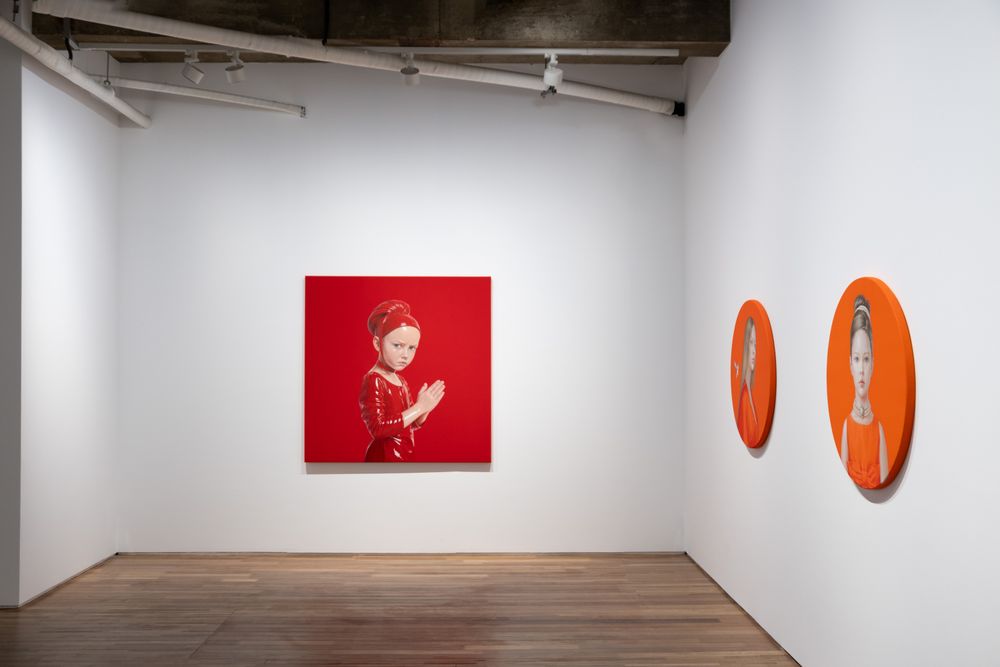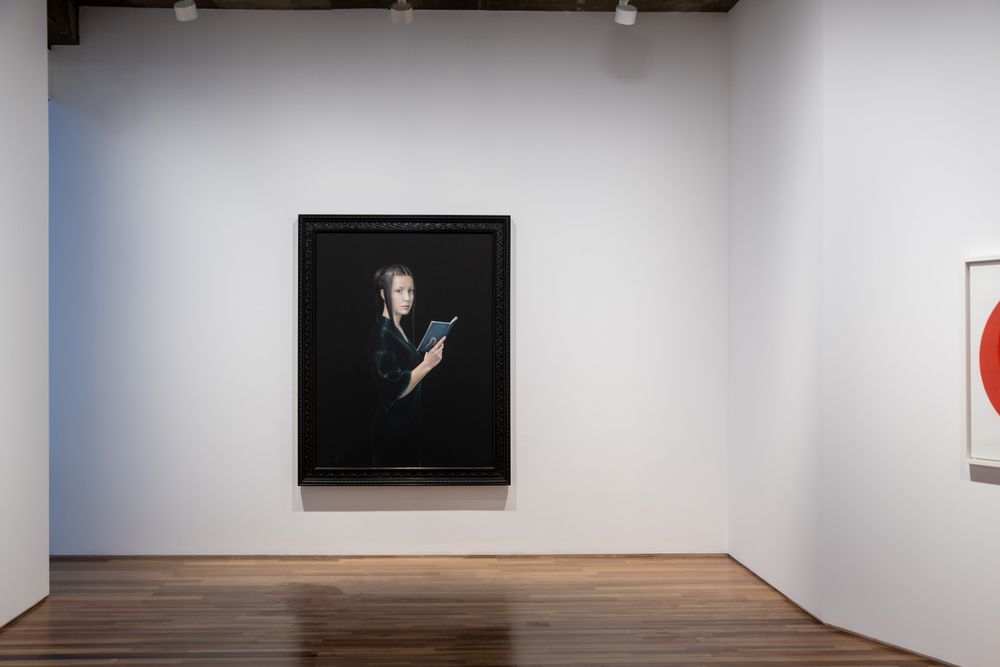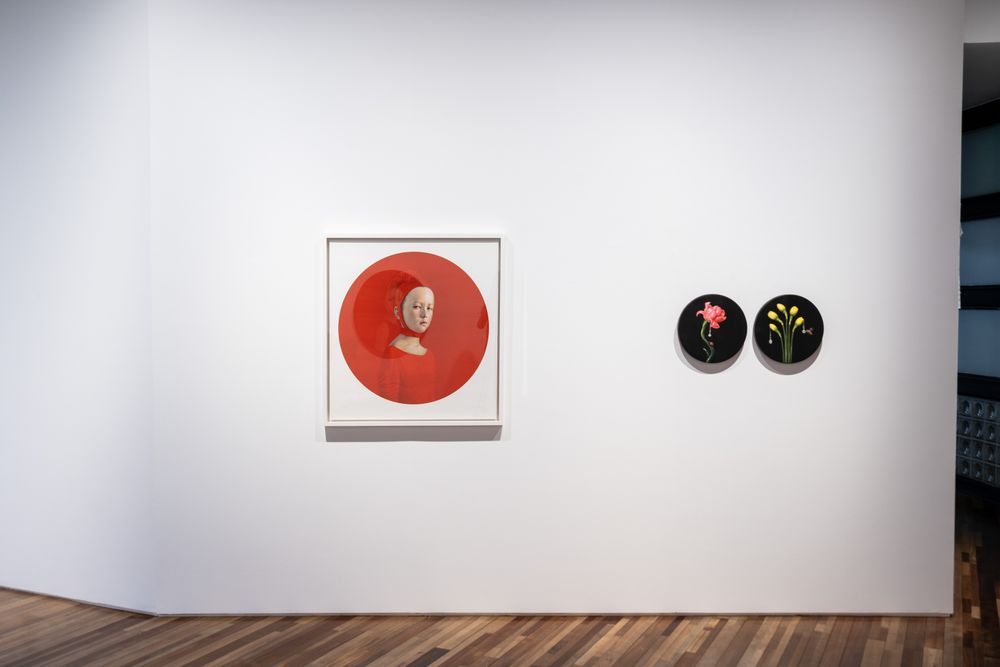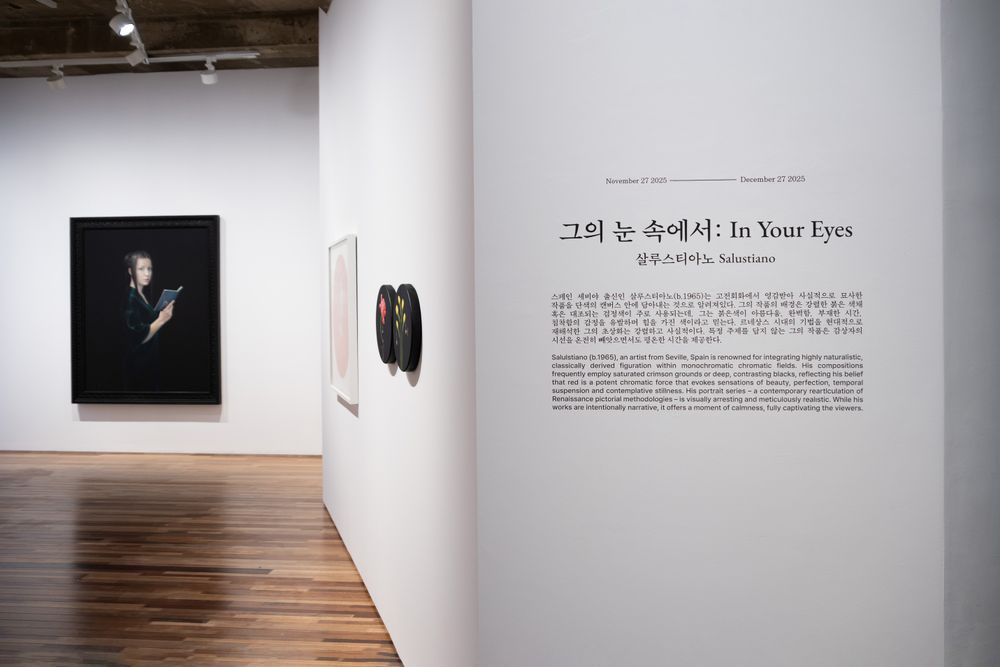
Salustiano (b.1965) has gradually reshaped the language of classical portraiture, placing it within a contemporary sensibility that values clarity, restraint, and emotional precision. His paintings reduce unnecessary narrative elements and focus instead on the structures through which emotion is conveyed. This approach appears most clearly in the controlled surfaces, the careful balance of the composition, and the way color is used to define the atmosphere of each work.
His visual foundations come from the perfectionism of the Spanish Renaissance, the psychological intensity associated with Francis Bacon, and the calm and contemplative quality often found in Eastern art. The background colors that long characterized his paintings have served as visual devices that heighten both symbolic meaning and emotional clarity. Red has represented vitality and spirituality, while black has expressed silence and a desire for the absolute. More recent works, including the A Love Is Pop series, introduce a brighter palette and a more immediate visual tone. Although the precise composition remains, the shift in color and expression signals a move toward a more open and contemporary visual world.
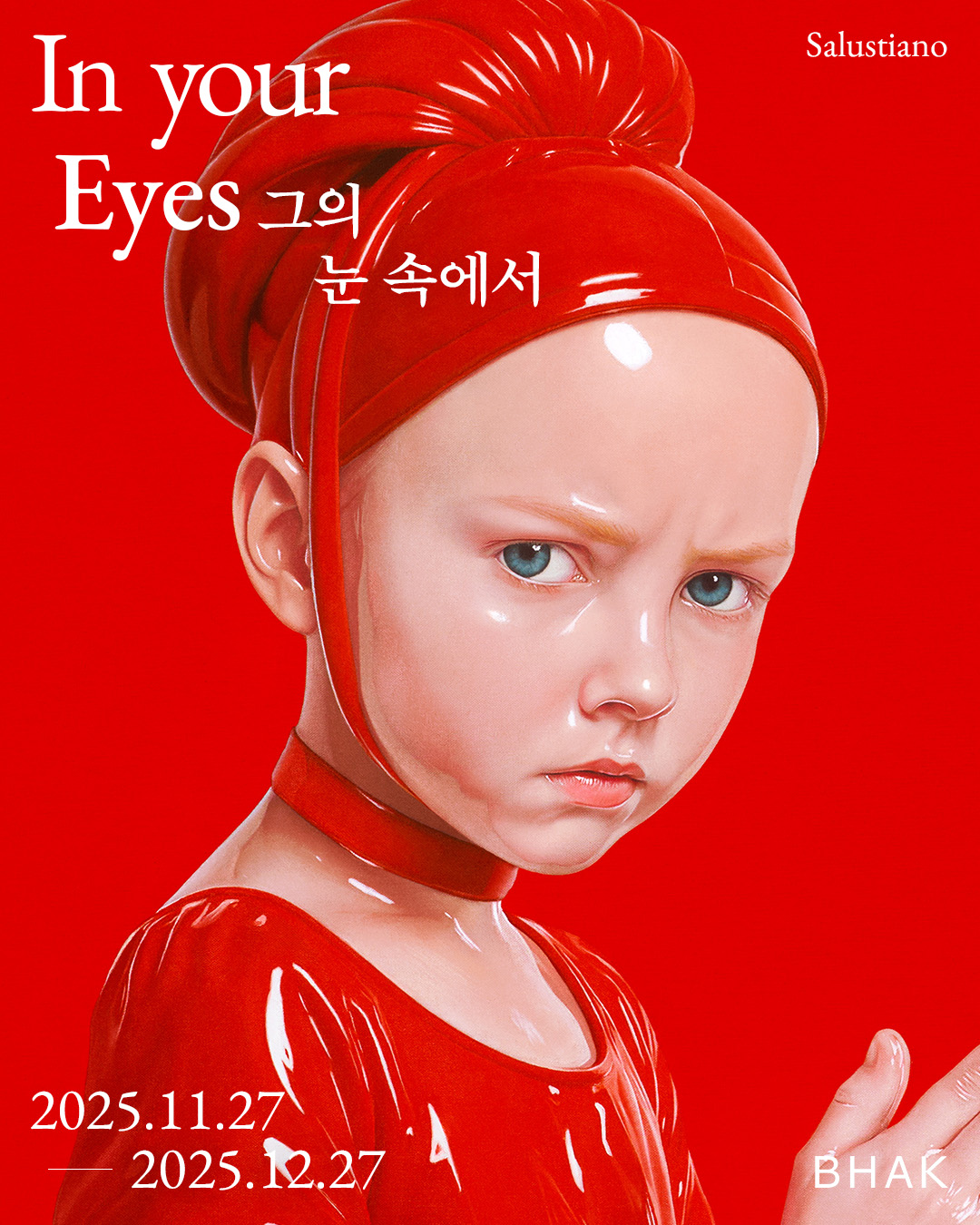
In Your Eyes focuses on this moment of transition. The young, anonymous models he often encounters in daily life carry a sense of neutrality and ambiguity. Their gaze does not reveal a story but instead creates a quiet emotional field that the viewer steps into. What emerges is not a psychological portrait, but a structure of feeling built through the simplicity of looking.
His realism does not aim to reproduce what already exists. It constructs an image that feels both unfamiliar and inevitable, a face that has never existed yet seems to belong to memory. His belief that art is shaped through deliberate, almost laboratory-like decisions rather than emotional confession results in paintings grounded in balance and clarity. They do not require complex interpretation; their beauty is direct and fully present.
The exhibition shows how this approach broadens the idea of portraiture today. It moves away from biography and identity, turning instead toward a more universal emotional experience. Through these gazes, the viewer enters a space of calm, harmony, and refined visual presence.