Thicker than water, stronger than oak
Every physical structure, regardless of being organically produced or artificially fabricated, is a manifestation of energy. From a flower petal to a fortress, each structure’s tangible form bears witness to the cumulative forces harnessed in its creation. A painting is no different, although the processes involved in its composition may be less apparent to the casual observer. There is, of course, the artist’s physical engagement with their materials, such as adding paint to canvas and using brushes to manipulate it through a certain technique. But equally important is the considerable cognitive energy that each artist devotes to their practice. Even at times when they are not actively painting, their continuous stream of thought – whether conscious or unconscious – invariably influences the work’s ultimate structure and appearance.
It's no secret that abstract artworks can be particularly difficult to parse, in terms of their structural elements and aesthetic attitudes. To what degree are their outcomes premeditated, and how much simply arises out of necessity, through improvisation, or purely by chance? At what point does focused energy give way to pure expression? Bo Kim’s paintings readily elicit such questions, yet they divulge precious little about the origins of the inimitable energy they exude. But that doesn’t mean they are hiding something. Rather, they invite us to recalibrate our habituated ways of seeing, for everything is always already visible – if you only know how to look.
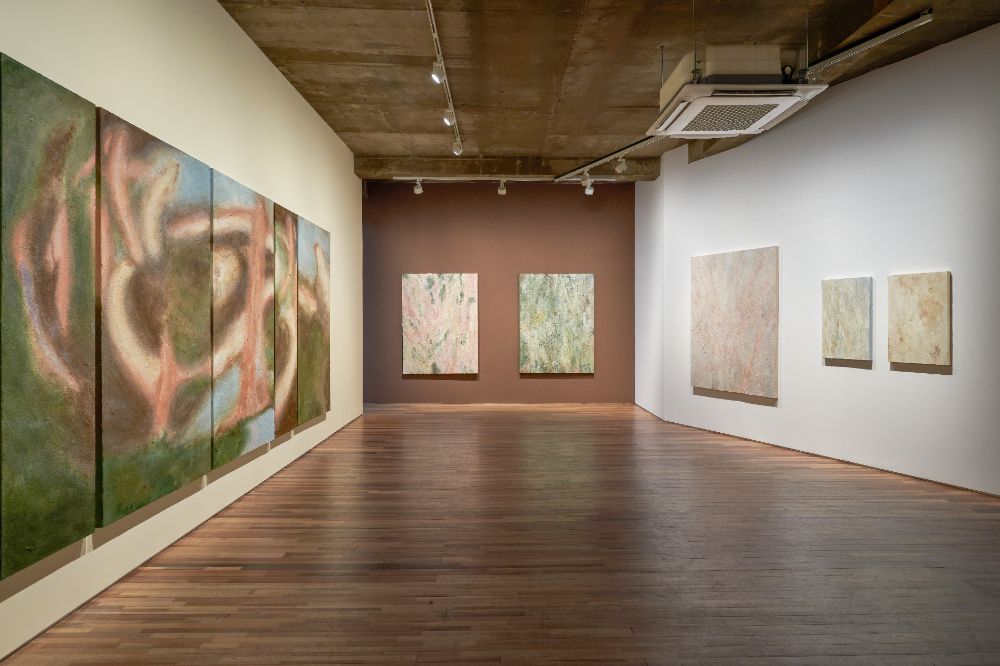
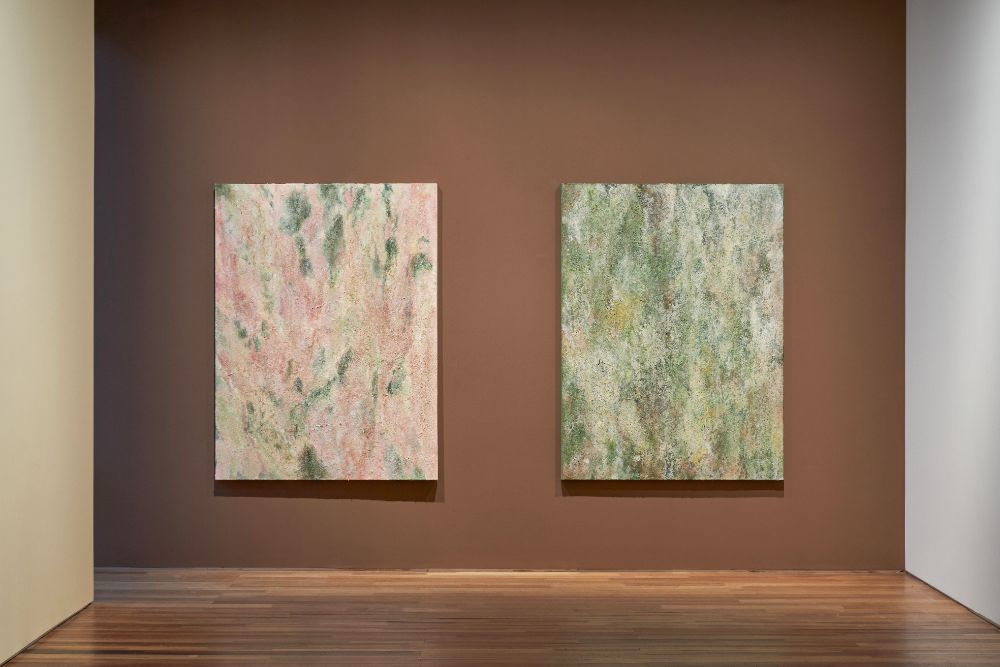
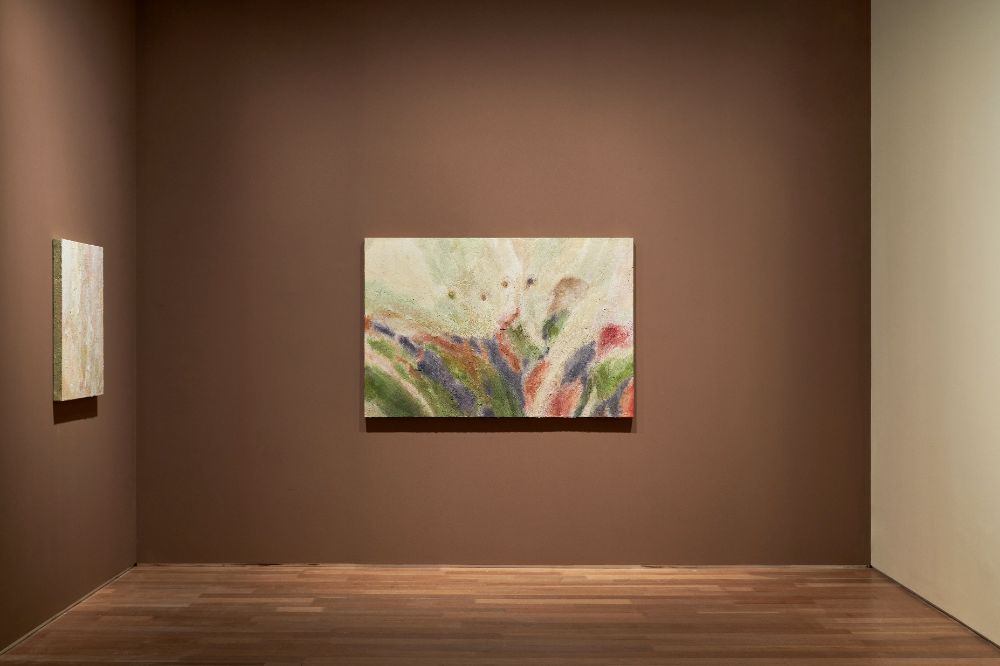
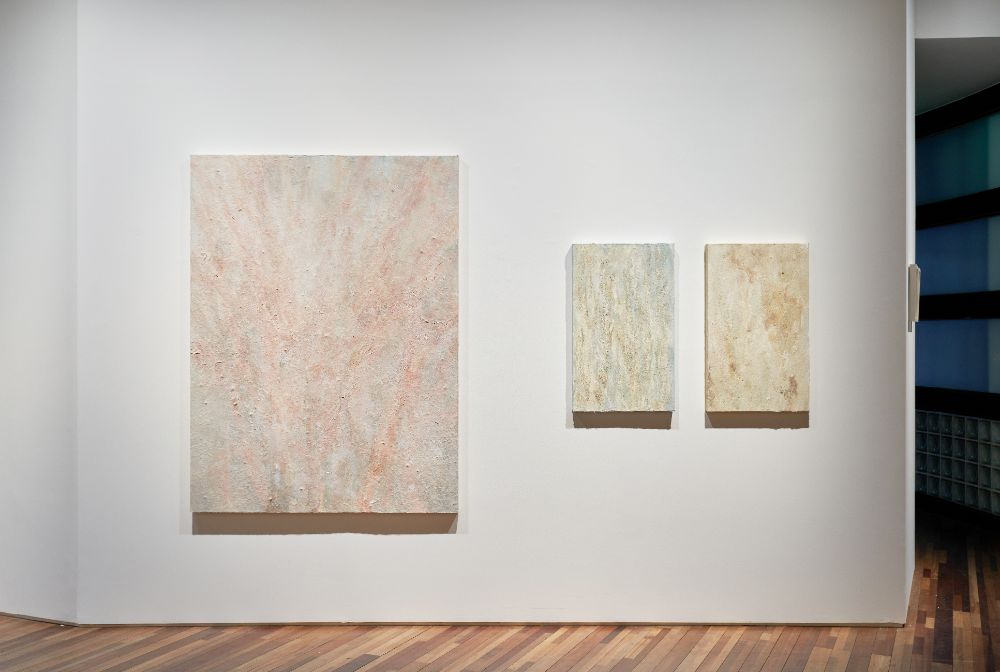
The energy that emanates from Kim’s abstractions can be traced to their deceptively complex internal structure. Using thin sheets of hanji (Korean mulberry paper), Kim creates organic topographies with a diaphanous translucence that confounds the eye’s ability to differentiate top from bottom, inside from outside. Paint is applied at various stages of the time-intensive process, leaving fields of color suspended within layered strata, only to gradually reveal themselves amid this gauzy matrix. Just like a shadow functions as a visual echo of physical presence, the faint contours and vestigial forms in Kim’s works are perceived as reverberating gradations that imply a depth beyond the realm of what can be seen.
Fundamentally, this is something that must be felt in order to be understood. Not just in a physical, tactile sense – after all, her works are endowed with an almost visceral materiality – but also as an extension of the soul, resonating with the vital energies swirling within us all. Kim’s paintings foster a sense of communion that registers in the non-visual regions of the mind, bypassing the visual cortex and lodging itself in the amygdala, an almond-shaped mass of grey matter that regulates the brain’s primal emotional response. In this way, her works operate less as recognizable optical phenomena than as catalysts for involuntary urges that correlate with the deep-seated sensibilities that make us human.
There is no more complex structure than the human body, with its intricately attuned biological systems and kaleidoscopic range of psychological states. Despite centuries of philosophical theory and decades of genetic research, the nature-nurture debate in human development remains unresolved – although most scientists today reject dualistic categorizations in favor of more integrated perspectives. Regardless, it’s safe to say that we are who we are because of our parents. Between the DNA we inherit from them at birth and the environmental conditions of our upbringing, as they guide us toward physical and emotional maturity, each of us represents a literal materialization of the energy that our parents have invested in us. It’s an indelible part of our very essence, linking us forever in a bond that encompasses body and mind.
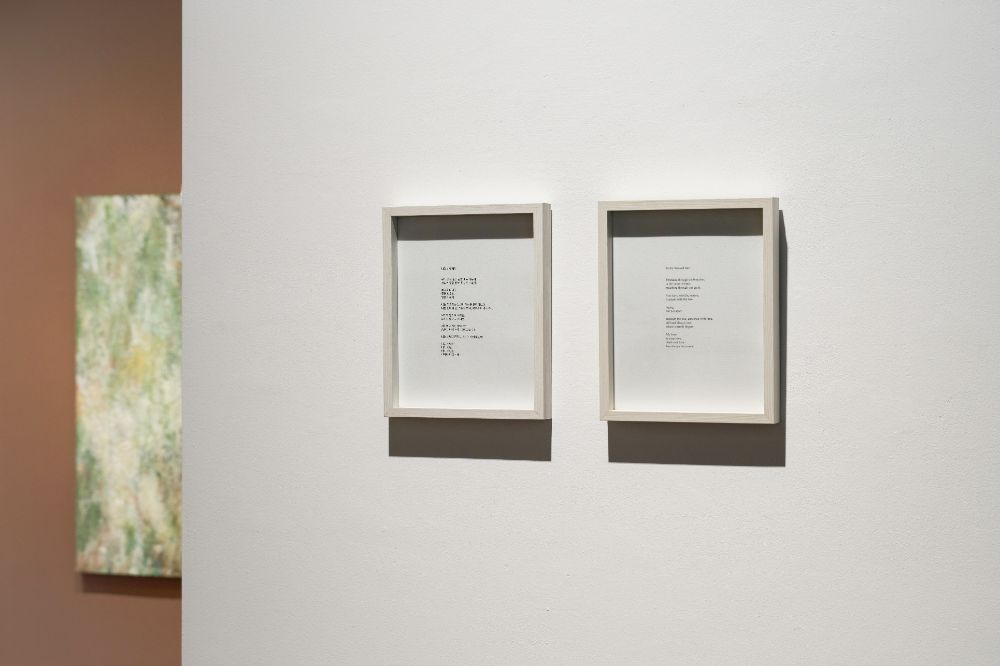
Needless to say, humans are not the only organisms to which this axiom applies. Vertebrates and invertebrates alike rely on such bonds for survival of their species, and even some trees act as “mothers” that communicate with and care for their offspring through underground networks of fungal threads. Perhaps due to their longevity and structural integrity, trees have long served as a cross-cultural visual metaphor of the way in which successive generations of a family proliferate out from shared ancestry. Semantically, arboreal references abound in English – whether talking about “roots” in the context of genealogical identity or remarking that “the apple doesn’t fall far from the tree” when children strongly resemble their parents. In Korean, however, familial idioms tend to invoke images of blood rather than trees, both when speaking about ancestry (혈통; “common blood”) and family relationship (피는 물보다 진하다; “Blood is thicker than water”).
For Kim, who is fluent in English and Korean, mixing metaphors is something that happens naturally – in fact, she embraces it as a strategy for thinking critically about impermanence and existential dialectics. Although these themes have always been central to her abstract painting practice, they recently acquired new significance in relation to Kim’s own family tree. Her mother and father, once hale and hearty, were beginning to show their age, not only in terms of physical degeneration but also declining levels of strength and stamina. Seeing their faces and figures transform before her eyes provoked a range of emotions that Kim had never previously experienced, and which inexorably brought themselves to bear on her paintings.
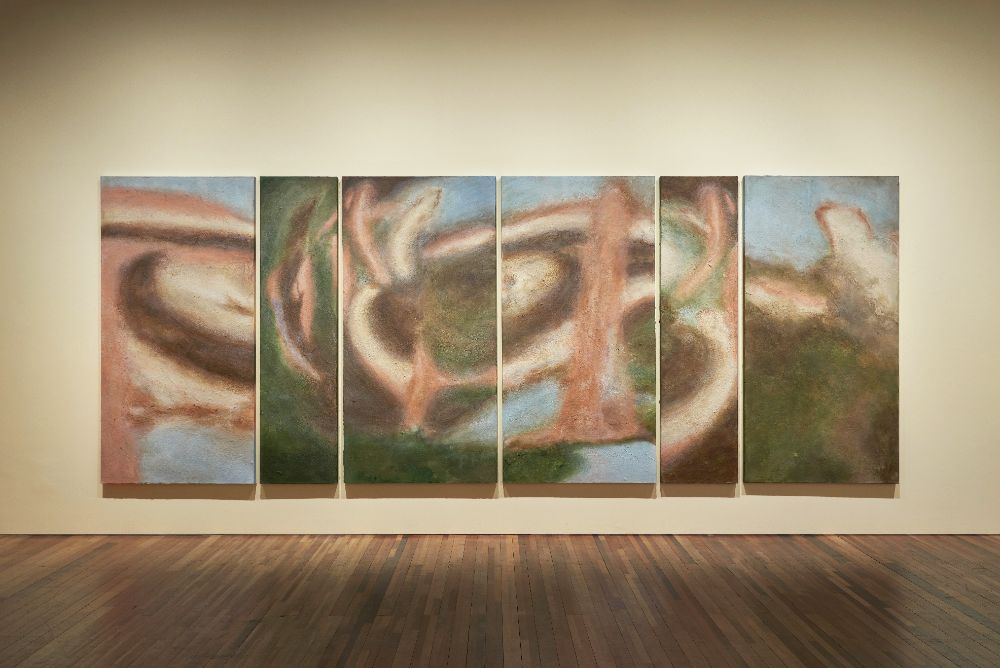
This was the conceptual impetus for Kim’s interest in semiotic signifiers of trees and blood, which manifest in her paintings as both structures and systems of energy. In some cases, she evokes such imagery with bold gestural forms construed as curvilinear tree limbs that intertwine in midair, as in the work Still and always one, where warmth lingers (2025). Here, thick applications of paint generate strong visual and textural contrasts, forging tactile associations with the solidity of old-growth trees and implying notions of constancy and comfort that parents are wont to provide during a child’s youth. Moreover, by subdividing the painting’s composition into six panels, Kim establishes a sense of rhythm that operates like a pulse, infusing the painting with a distinctly somatic stimulus. Other works disclose a different modality through ambiguously rendered branching structures that recall the veins found in tree leaves, as well as those faintly visible on the back of human hands – often the first and most obvious indicators of aging.
The emotional dimension of Kim’s abstract forms is felt more acutely than their mere appearance might otherwise suggest. They carry the weight of memory and its concomitant acceptance of ephemerality, which we all must face in the fullness of time. Just like our relationships with our parents evolve as we grow older – from the pure and unconditional love of childhood, to the skepticism and rebellion of adolescence, to the inevitable resurgence of respect and gratitude of adulthood as we begin to comprehend the selfless sacrifices made by our parents throughout our lives – so does the experience of Kim’s paintings when we open ourselves to their full affective energy.
As expressions of compassion and care, these paintings evince the artist’s earnest practice of honoring the enduring support and devotion from her own parents and, by extension, all parents who serve as steadfast protectors and proponents of their children. Kim’s symbolic allusions to trees and blood invariably tap into deeply ingrained iconographies with universal resonance, bolstered by the unique material properties of her medium that prompt a palpable sense of depth and induce a more expansive approach to apperception. Slowly but surely, her paintings reveal the emotional layers latent within all family trees and the bloodlines that permanently link us to our ancestors in an unbroken chain of intergenerational empathy.
Text by Andy St. Louis