Ham Sup Retrospective: Whirling with the Wind
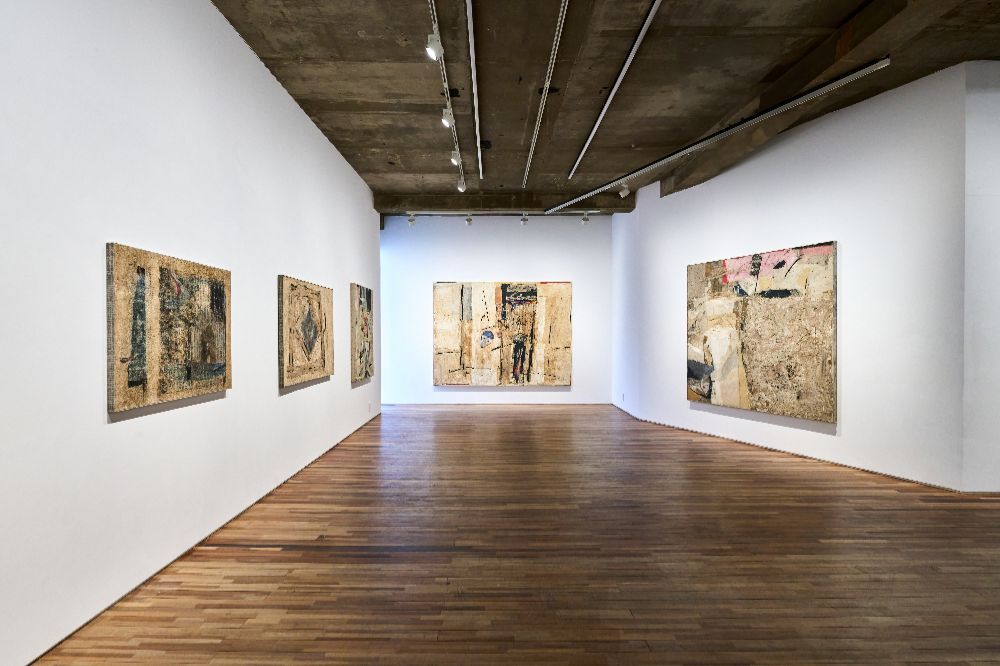
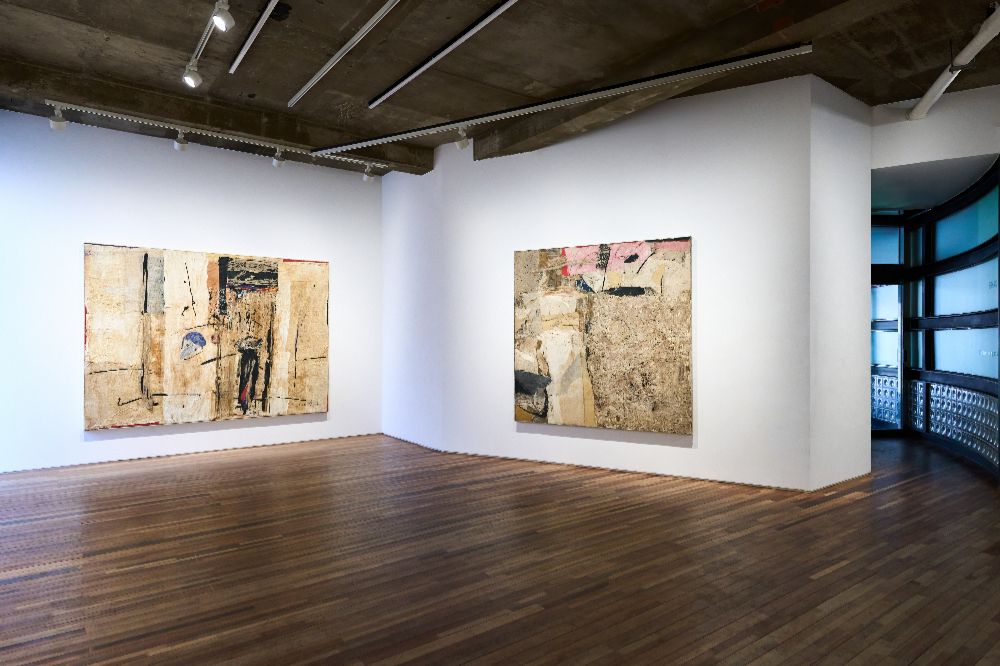
To understand who we are, we must first understand our past—its history, its culture. Art is no exception. In Whirling with the Wind, BHAK presents a retrospective of Ham Sup (1942–2024), a Korean artist who explored the roots of self and art through the cultural spirit of Korea. His works, often described as abstract paintings, go beyond mere formal abstraction—they are the result of decades of experimentation and contemplation. Ham’s art gracefully traverses time and geography, blending tradition and modernity, East and West.
1. Enthusiasm (1984–1995)
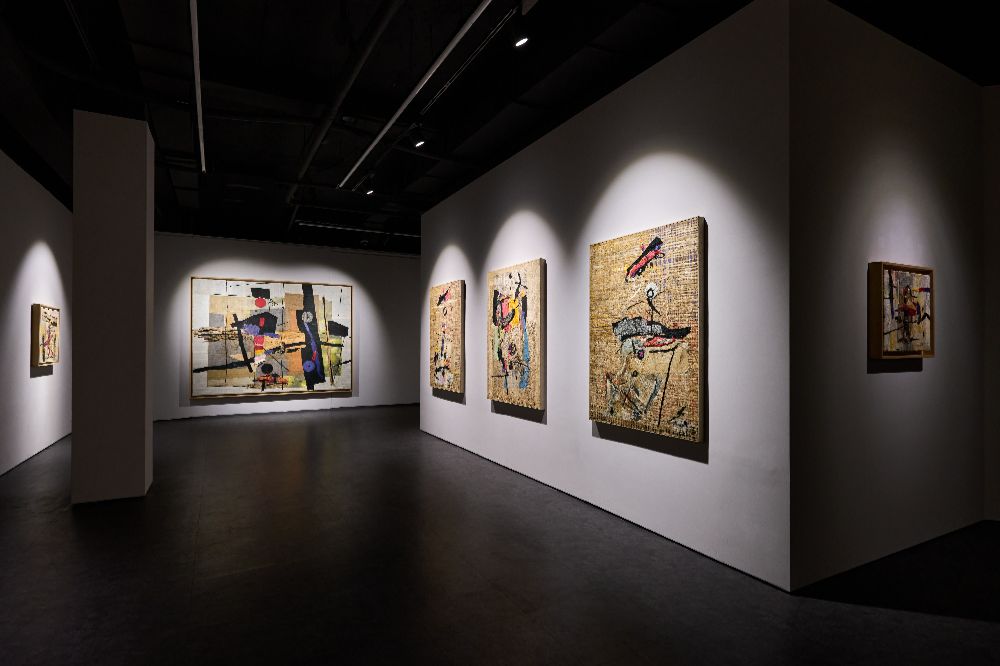
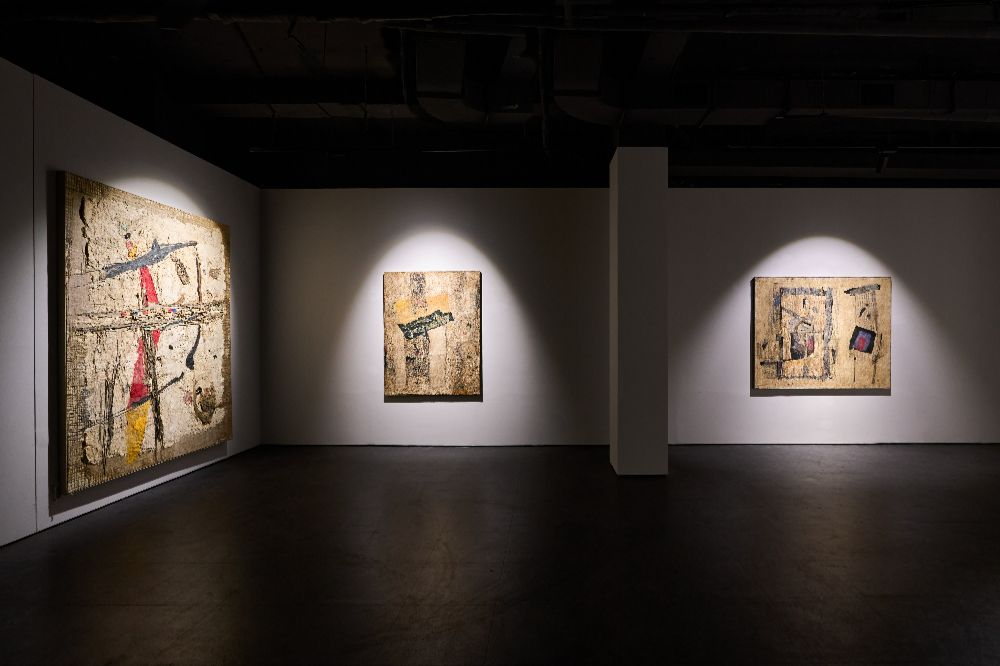
Ham Sup’s artistic journey begins with the Enthusiasm series. As the title suggests, these works express a kind of fervent, ecstatic energy. On layered sheets of Hanji, the artist’s dynamic strokes unfurl like fluttering wings, vibrating lines, or exuberant dance movements. This visual rhythm recalls the bold energy of Western abstract expressionism, yet Ham’s approach is deeply rooted in Korean tradition.
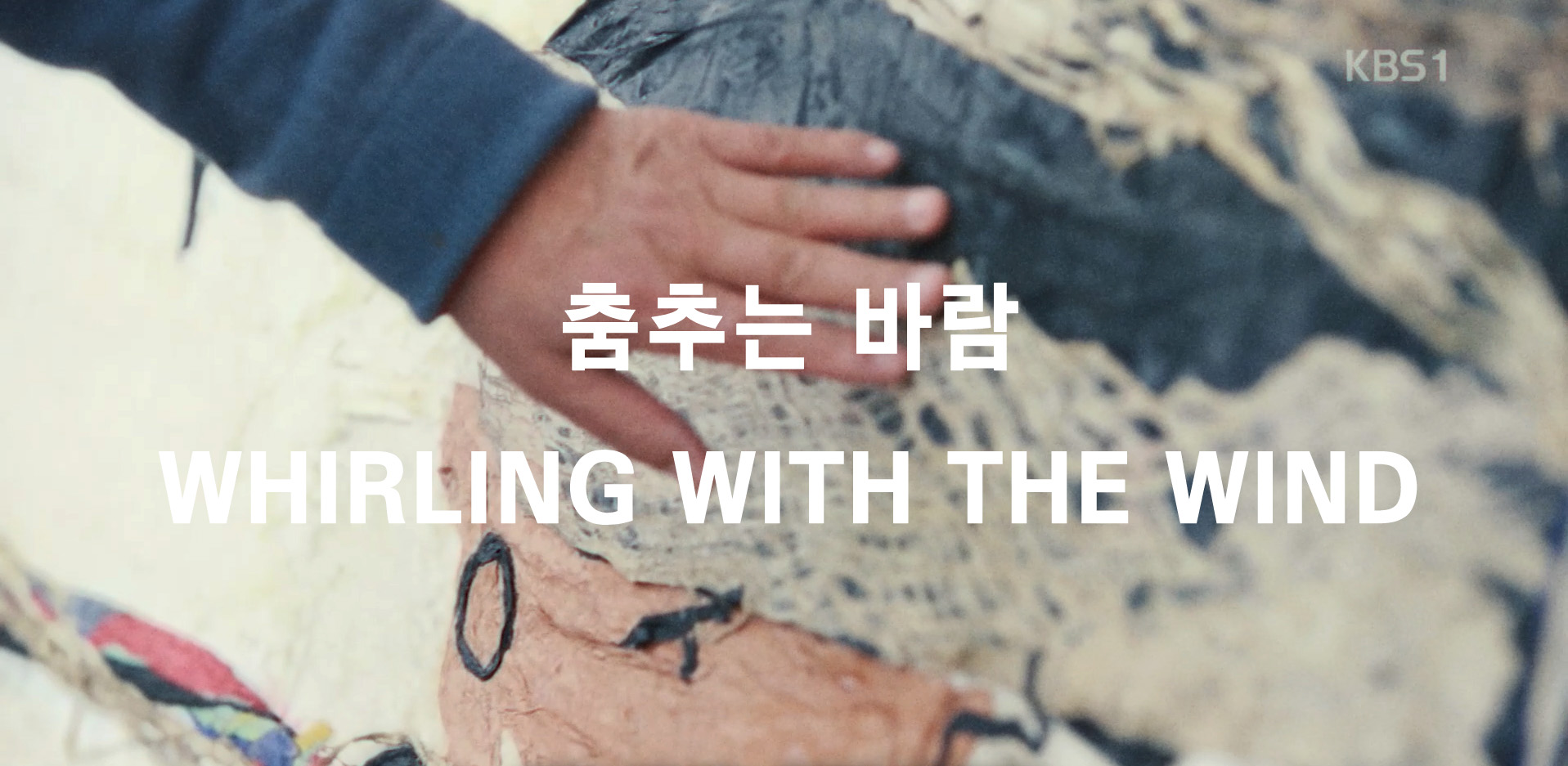
“Soaking Hanji in water, I tear it, beat it, knead it. The act of throwing, striking, crushing—it’s more than a method. It’s a performance, like playing traditional Korean percussion. The vibrant colors of gut rituals and Samulnori are closely connected to my work.”
Inspired by Korea’s indigenous rites and folk celebrations—gut shamanic rituals, guardian spirits, and percussion ensembles—Enthusiasm captures a uniquely Korean emotional rhythm called Shinmyeong (Enthusiasm): a release of emotion that generates vitality and joy. Ham did not paint in the traditional sense. Rather than brush and pigment, he threw, scratched, and pressed Hanji onto a canvas, invoking a painting style that is also a performative gesture—an awakening of the inner spirit through the body.
2. Day Dream (1995–2010)
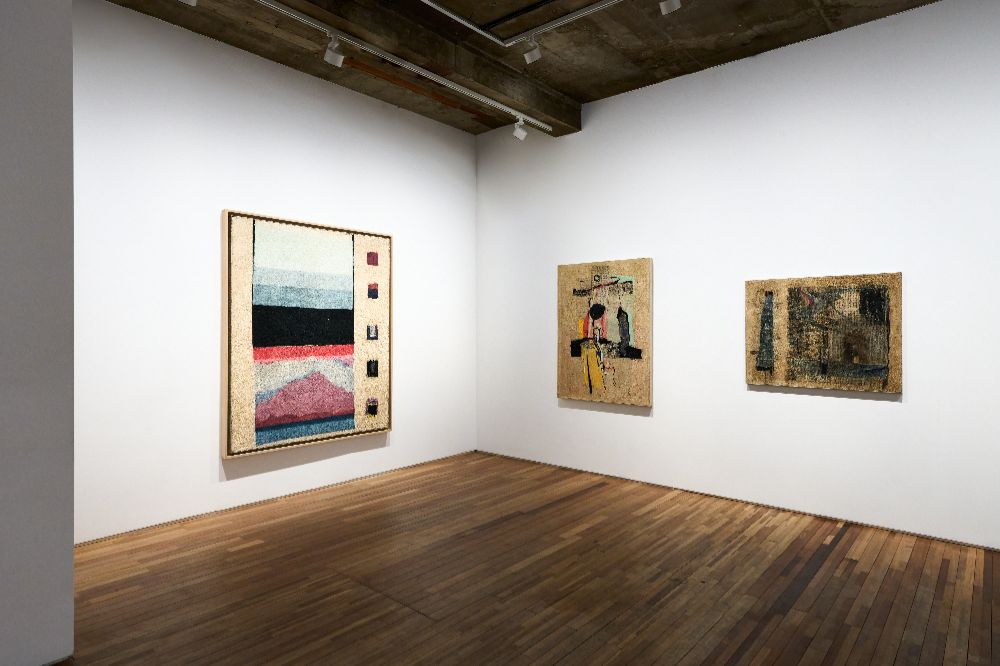
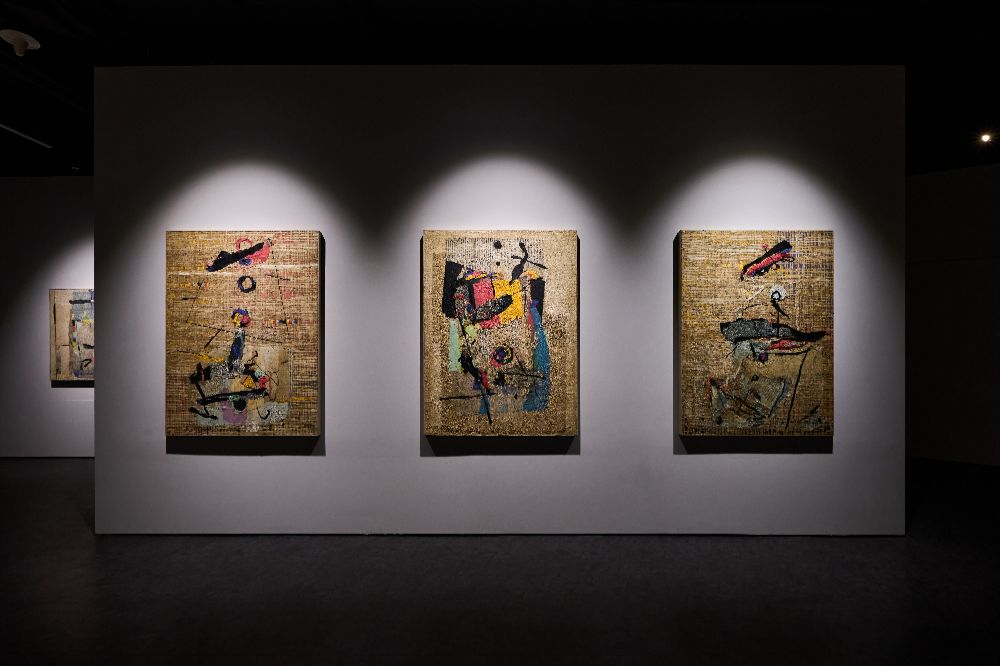
In the Day Dream series, Ham turns inward. While tradition remains his inspiration, it becomes more internalized. If Enthusiasm was defined by the energy of action, Day Dream draws from the quiet materiality of Hanji itself. The artist began to explore the medium more deeply—its absorption of color, its flexibility, and its quiet strength.
“I drew inspiration from colorfully fluttering flags at village shrines, vivid palace patterns, children in hanbok on a swing, and the subtle motifs on rice cake boards.”
“I wanted to meet Hanji on the canvas without revealing myself. I wanted to absorb into the paper and possess its inner world.”
“Hanji is not just a material—it is emotion made visible. It holds the breath, tears, and sweat of the Korean people, the traces of intimate time.”
Through repeated processes of soaking, layering, and kneading Hanji dyed with natural pigments, Ham created surfaces that are at once serene and intense, translucent yet deep. The result is a visual language where the material and spirit of Korea are inseparable. Day Dream distills the Korean soul—quietly, profoundly, and with grace.
3. One’s Hometown (2010–2022)
Ham Sup’s artistic and personal journey comes full circle in One’s Hometown, a series created after he returned to his birthplace, Chuncheon. After decades in Seoul’s art scene, he chose to distance himself from the mainstream, seeking creative freedom and solitude.
“The colors, shapes, and lines in my work are the richness of my hometown made visible. My life and art are grounded in the Korean spirit.”
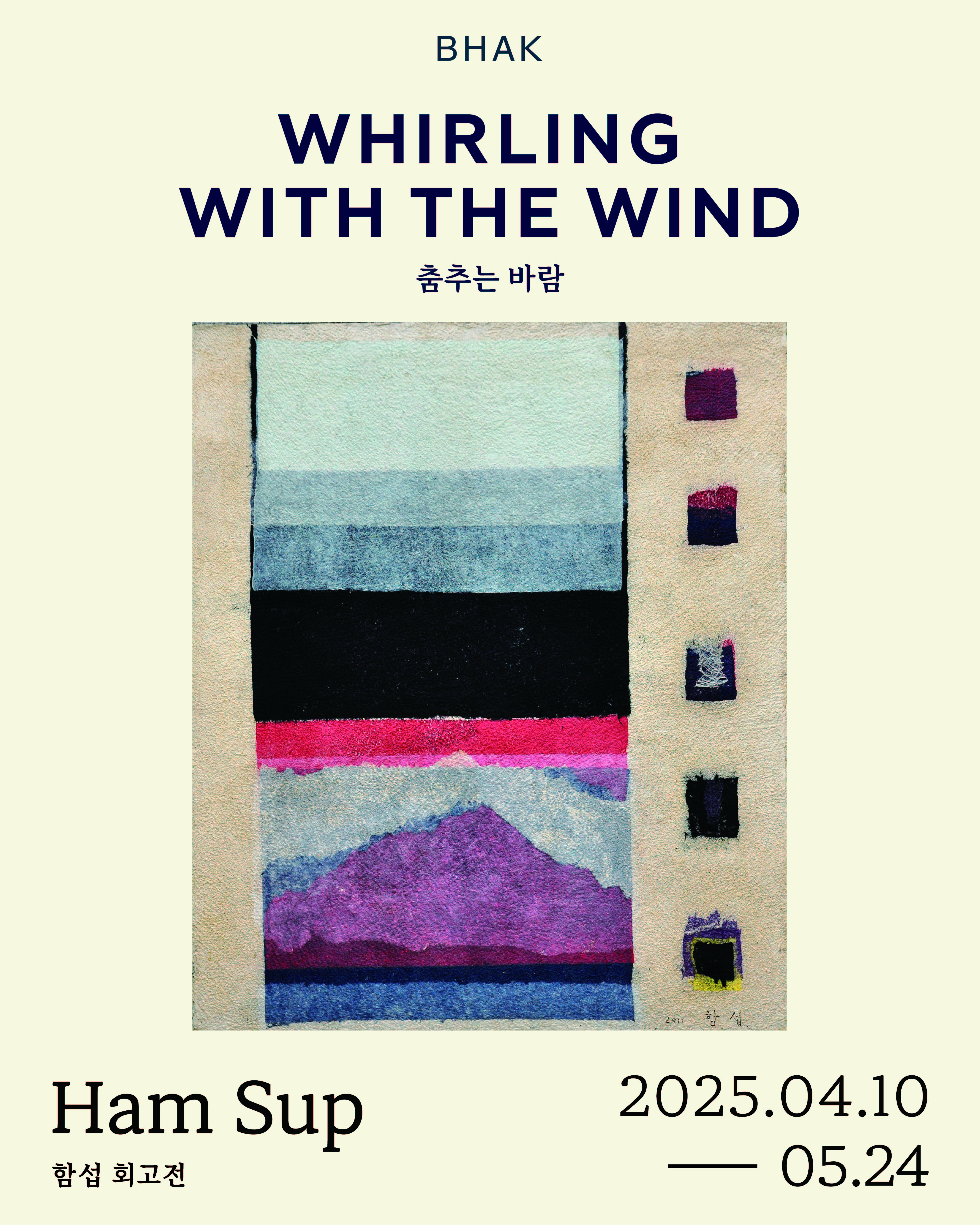
For Ham, hometown was not only a place but a space of memory and emotion. His return was not just physical—it was a philosophical return to origin. Unlike his earlier works filled with cultural motifs, these paintings gently reflect everyday life and the quiet nature surrounding his studio. They are meditative, embodying both a beginning and an end—a personal declaration of identity and purpose.
His return also symbolized liberation. By moving away from established systems and art world conventions, Ham freed himself to pursue an art unbound by trends or ideology. One’s Hometown captures this inner freedom—a serene, grounded joy that transcends time and place.
Whirling with the Wind celebrates Ham Sup’s lifelong quest for a spiritual and artistic truth that transcends time, geography, and convention. At the heart of his work lies the Korean concept of pungnyu—an aesthetic philosophy grounded in nature, beauty, music, and artistic refinement. For Ham, art was not merely a practice, but a way of living with grace and freedom.
The exhibition title, Whirling with the Wind, is a poetic interpretation of the term pungnyu, suggesting an invisible yet ever-present force that stirs our senses and elevates our spirit. Through this exhibition, we invite you to experience Ham Sup’s world—where art, life, and tradition flow together like wind, awakening something deeply human within us all.
Text by Sohee Lim (Curator, BHAK)