Medium and Communication
Visual art begins as an abstract thought but ultimately confronts that thought with a concrete image. In this process, the medium is more than just materiality becomes a crucial vehicle for condensing an artist’s thoughts, emotions, and energy. While the term "medium" conventionally refers to materials or techniques, it also functions as a conduit for artistic expression, carrying and transmitting the artist’s world. In other words, the visual elements that stem from a medium—color, form, texture, and spatial composition—evolve into a distinct visual language, communicating the essence of a work. Just as the shape of a vessel influences how we perceive the water it holds, artists continuously experiment with different mediums to articulate their creative vision, endlessly exploring the formal language unique to their work.
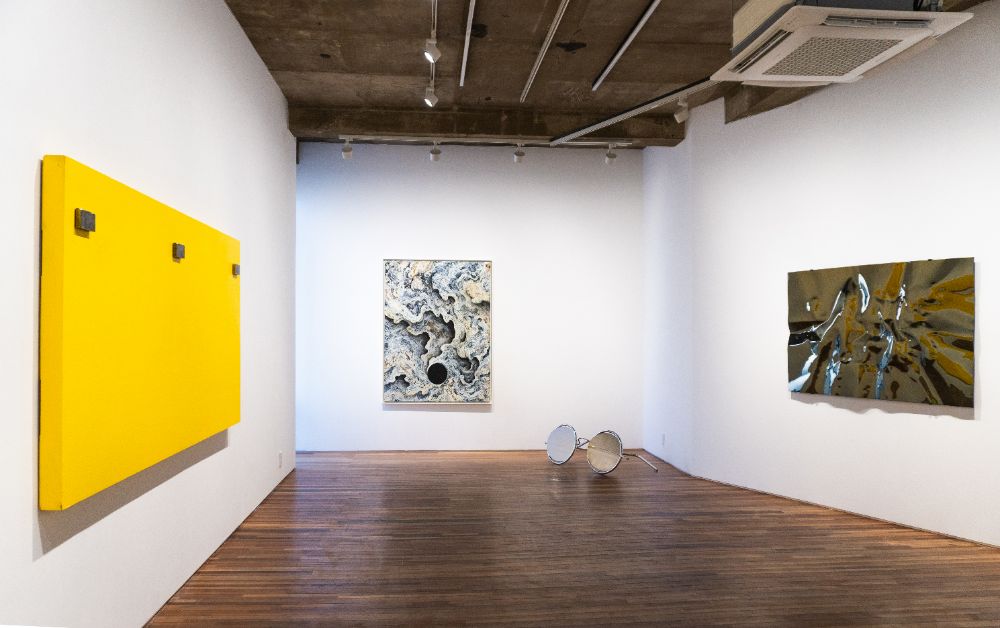
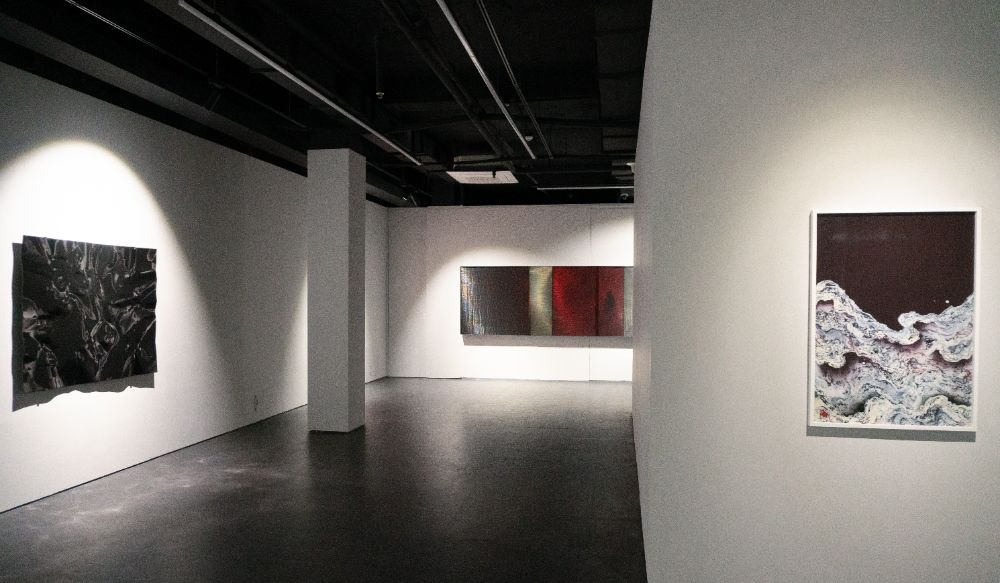
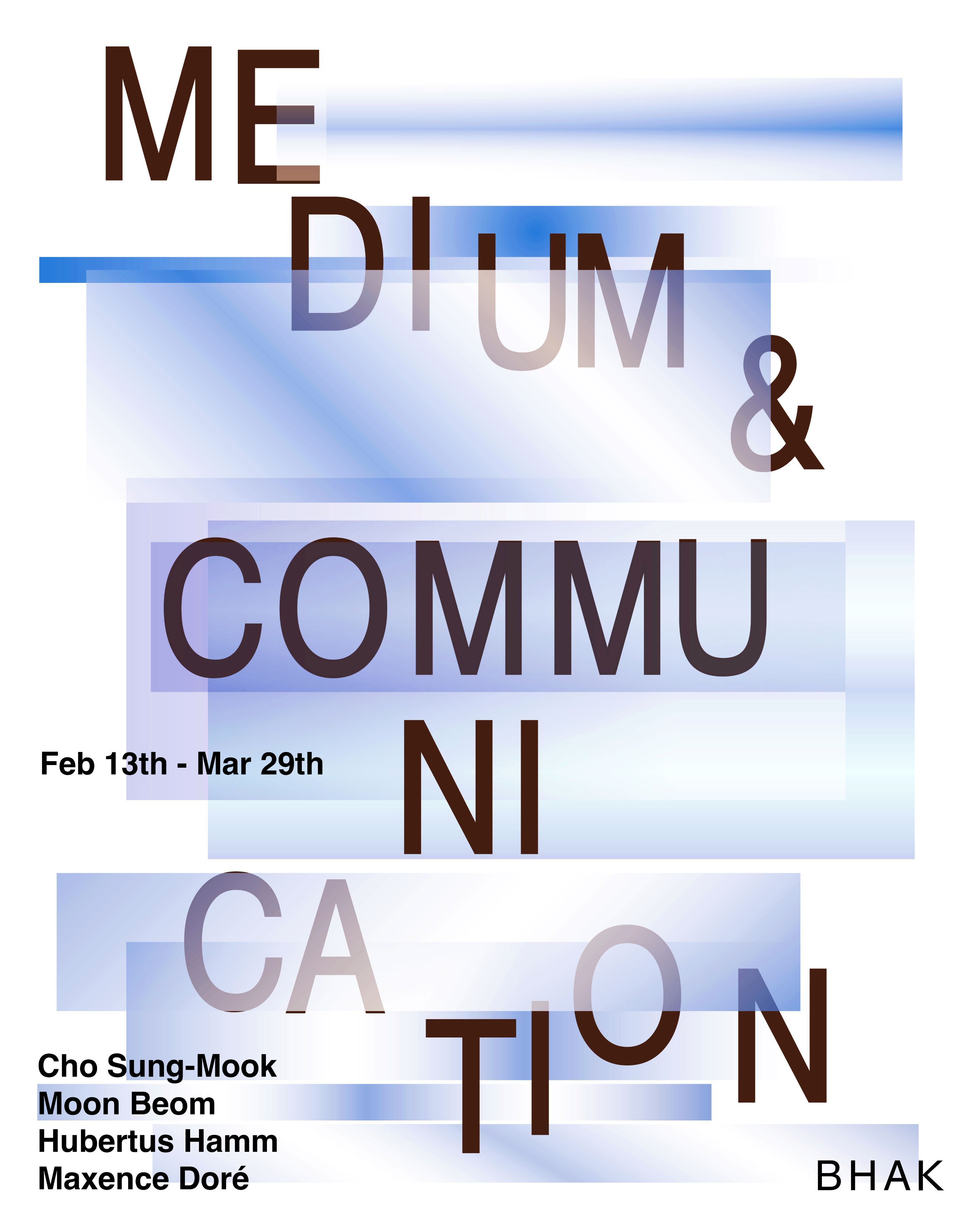
The exhibition "Medium and Communication" brings together the works of Cho Sung-Mook, Hubertus Hamm, Moon Beom and Maxence Doré, each of whom possesses a distinctive understanding of their chosen medium. This exhibition examines how the medium, as a language, engages in dialogue with the viewer, forging meaningful connections.
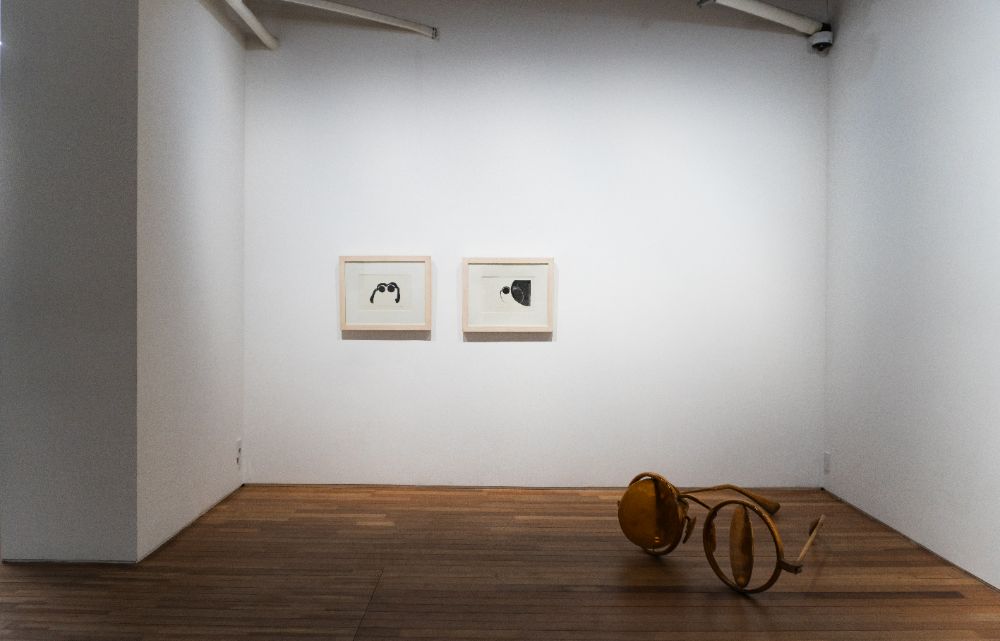
Cho Sung-Mook (1940–2016) offers a striking example of an artist who approached mediums in a unique and conceptual way. As a founding member of Wonhyeonghoe, Korea’s first avant-garde sculpture group in the 1960s, and a key participant in the experimental art collective AG (Avant-Garde Association), Cho played a leading role in shaping contemporary Korean sculpture. His work revolves around the theme of communication, frequently incorporating recognizable objects.
In his Communication series, featured in this exhibition, Cho presents sculptural glasses as a central motif. However, these glasses, cast in bronze, are stripped of their original functionality—magnified to exaggerated proportions and burdened with an improbable weight. The lenses, rather than aiding vision, appear perforated and incomplete. The title Communication suggests that the act of seeing is inherently tied to the process of communication. By distorting an object’s form and stripping away its original function, Cho’s glasses transcend their literal meaning, transforming into metaphors for perception and dialogue. His work invites us to reflect on the nature of visual experience and challenges us to reconsider the essence of communication itself.
Hubertus Hamm (b. 1950) explores the interplay between art and audience, emphasizing the reciprocity of communication. His approach resonates with Cho Sung-Mook’s investigation of vision and perception, yet Hamm extends the concept further by introducing movement and viewer interaction into his work.
Originally trained in photography, Hamm grew increasingly dissatisfied with the passive nature of photographic spectatorship. He sought to create dynamic, living artworks—works that actively engage with the viewer rather than merely being observed. His practice incorporates diverse media and techniques, yet all his pieces share one defining characteristic: motion.
At first glance, his wall-mounted works resemble base-reliefs, yet as the viewer approaches, the surfaces subtly shift in color, form, and image, responding to movement and gaze in real time. By integrating the viewer’s physical presence and optical engagement into the work itself, Hamm’s pieces become complete only through interaction. His practice surpasses the constraints of two-dimensional media, extending artistic perception into a fourth dimension—time and space. Ultimately, his works serve as fluid, open spaces for communication, where meaning is shaped not just by the artwork itself but by the way it is experienced.
Moon Beom (b. 1955) emerged as a pioneering figure in Korea’s contemporary art scene during the 1980s, a period marked by the polarization of modernism and the People’s art. He sought to redefine the boundaries of painting, challenging traditional notions of the medium and expanding its possibilities beyond the canvas.
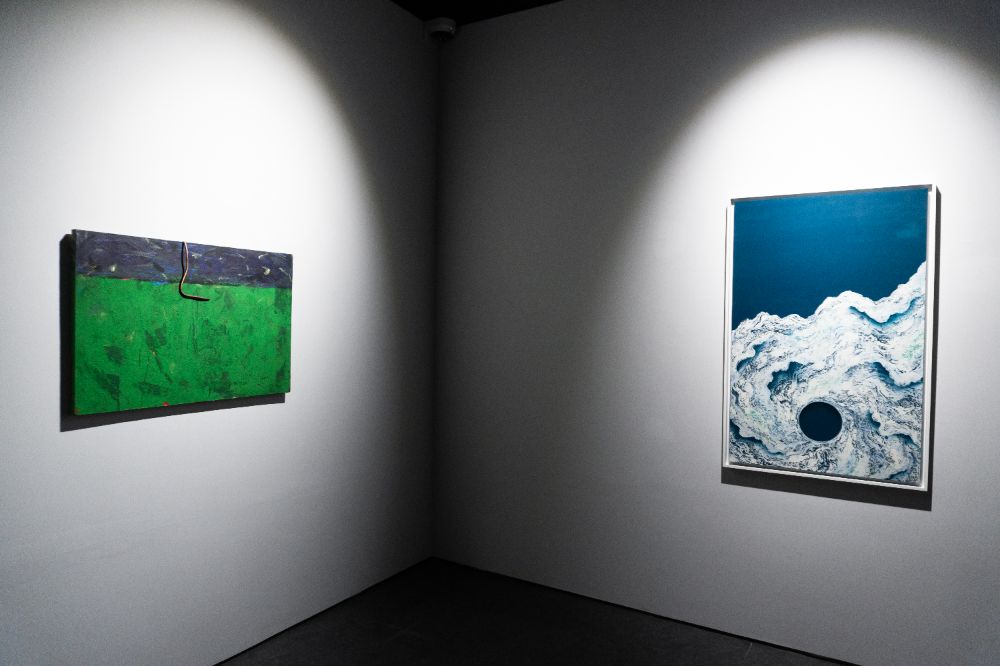
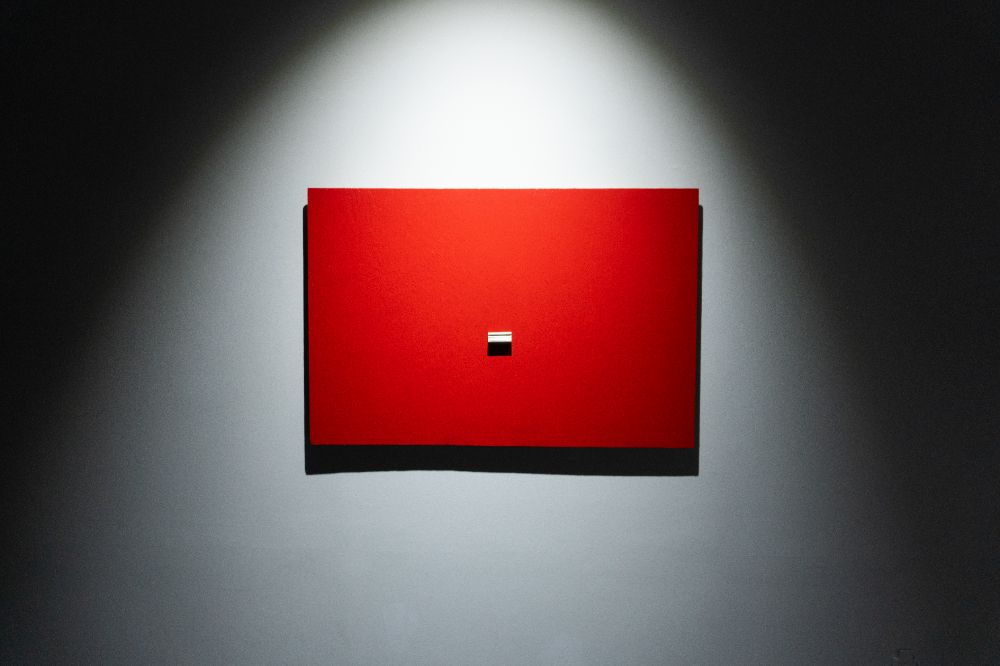
Spanning painting, installation, and video performance, Moon’s body of work demonstrates a relentless inquiry into the materiality of painting. The pieces shown in this exhibition illustrate his enduring fascination with the limits and possibilities of the pictorial planes. His works feature bold, non-representational color fields, onto which he affixes three-dimensional materials such as iron fragments, aluminum, and felt. These sculptural elements extend beyond the canvas, creating a tension that oscillates between compression and expansion, generating a powerful sense of energy.
This charged interplay between color and material transforms his paintings into experiences that are not merely seen but felt. By dismantling binary concepts such as representation vs. abstraction and surface vs. depth, Moon Beom disrupts traditional artistic hierarchies. His work compels both artist and viewer to reexamine the act of seeing, ultimately posing questions about the fundamental purpose of artistic expression and the various modes of visual communication.
For Maxence Doré (b. 1990), painting serves as a spatiotemporal domain—a conceptual space where the artist and viewer embark on an introspective journey. His works encourage meditative engagement with inner thought and perception.
Doré’s paintings are characterized by fluid, undulating curves, delicately rendered in oil and marker over smooth, airbrushed surfaces. These forms recall topographical and atmospheric phenomena, drawing inspiration from meteorological imagery captured by satellites. The resulting compositions exist at the intersection of the real and the imaginary—simultaneously evoking landscapes, oceans, and celestial horizons.
His overlapping curves create optical illusions, imbuing his paintings with a sense of depth and movement. These visual effects transcend simple aesthetics, activating subconscious streams of thought within the viewer. Doré’s work dissolves conventional notions of time and space, bridging consciousness and unconsciousness, reality and dream, exterior and interior worlds. His paintings function as portal spaces of boundless freedom, inviting us to embark on a journey beyond the visible world.
"Medium and Communication" highlights how each artist’s chosen medium evolves into a distinct language, forming a bridge between artwork and audience. Rather than passively inheriting traditional mediums, these artists actively redefine them, using materials as instruments of intention and expression.
As an artist’s vision merges with the physicality and formal elements of a medium, the very nature of that medium is reimagined. This process expands the boundaries of communication, allowing for new forms of engagement between the artwork and the viewer. In experiencing these works, visitors are invited to interpret, engage, and immerse themselves, discovering the infinite possibilities of artistic communication and the joy of dialogue through visual art.