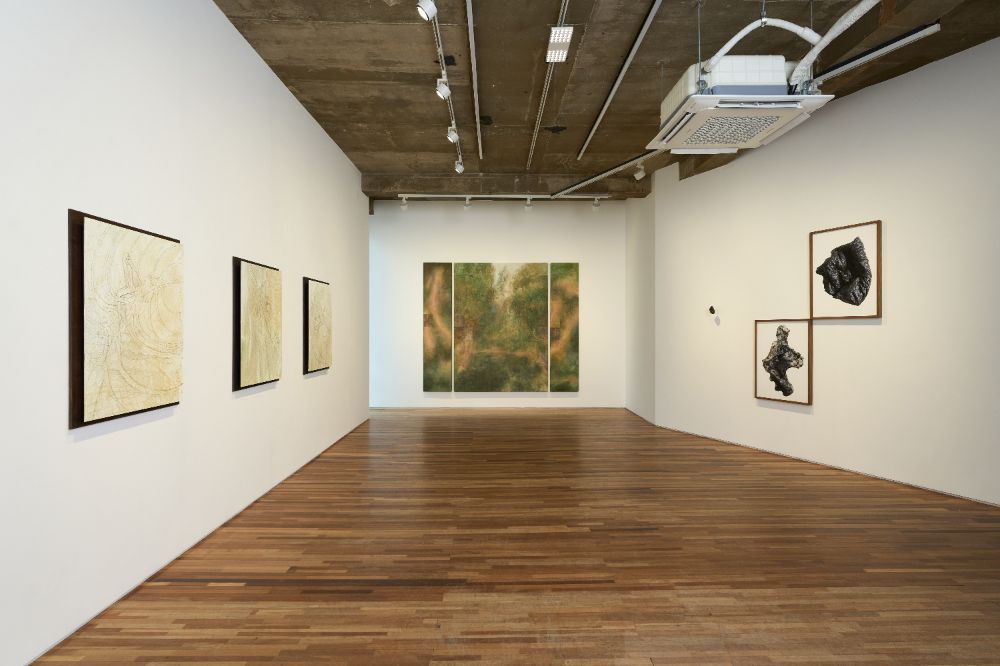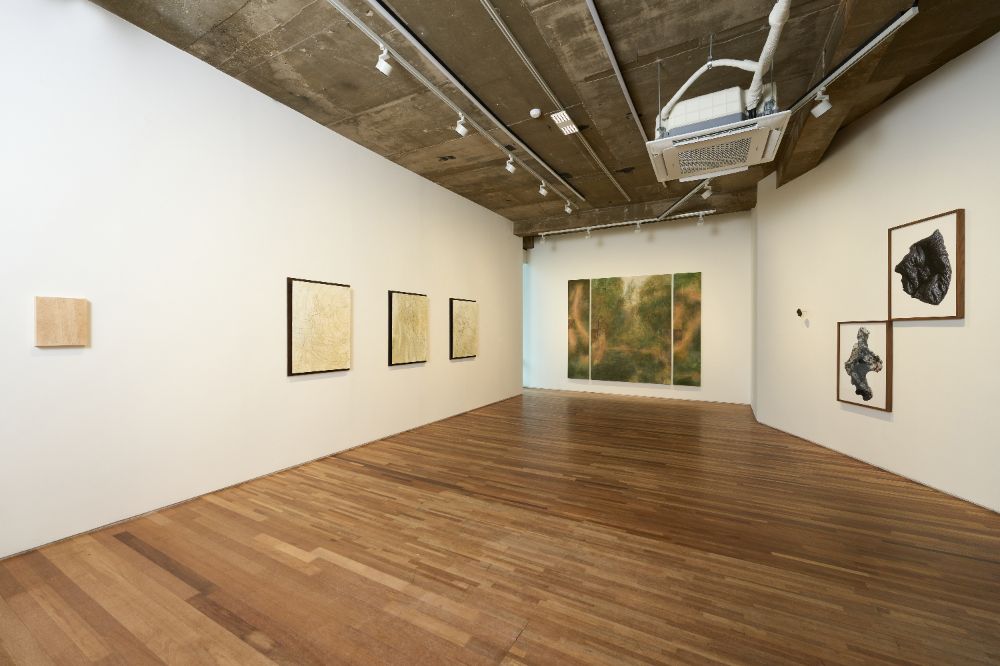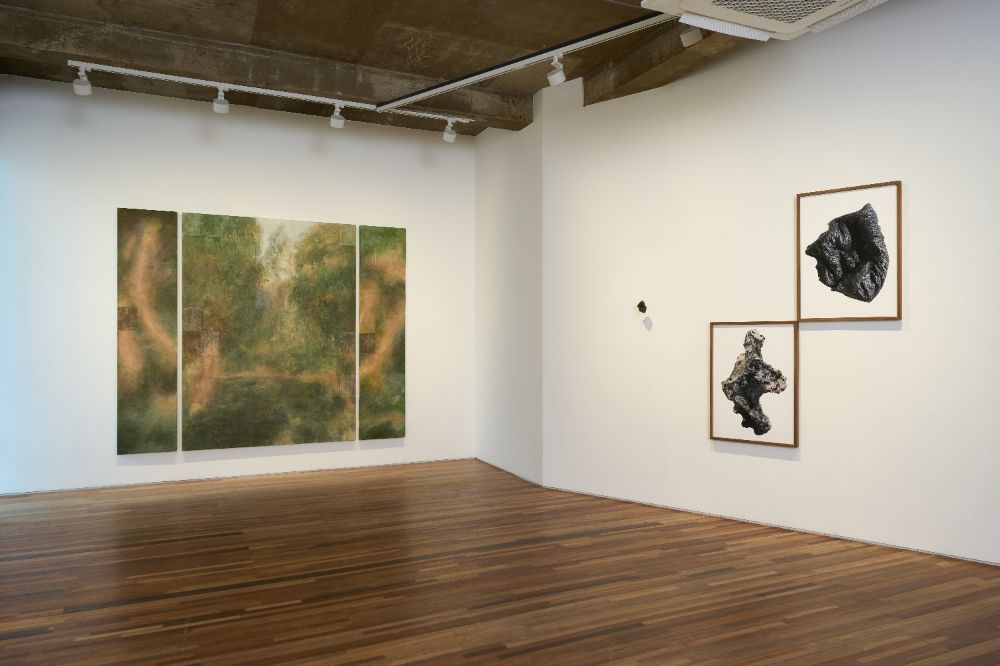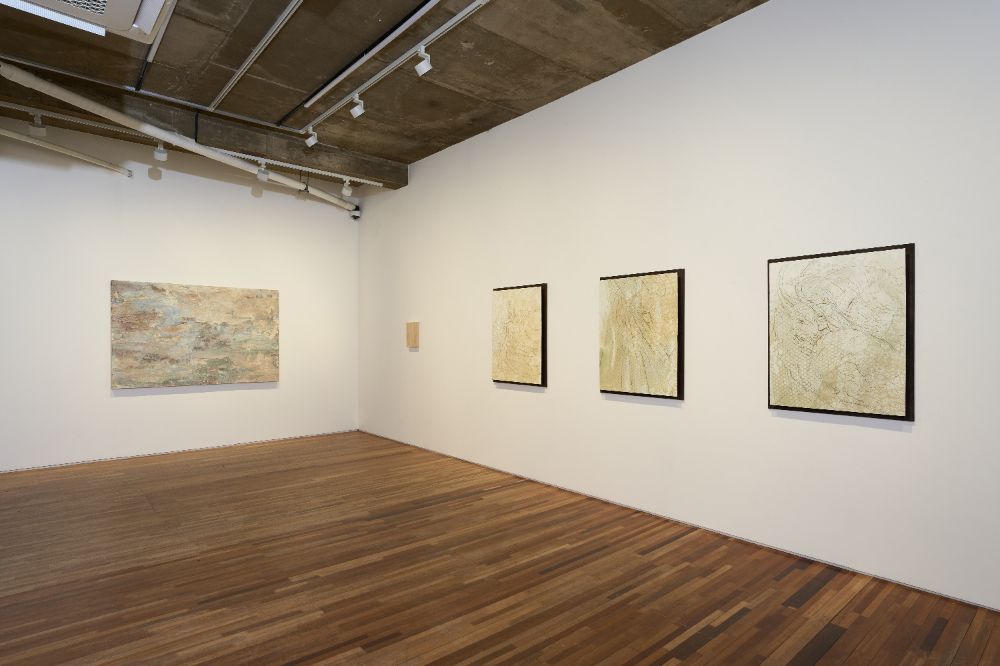
Our home is an ensemble of natural and man-made products. In this context, home is simply the environment around us that we take for granted, or in a more active sense, the realm of nature, humans, matter and their interdependence. Just as the sky is a background of existence for birds and the sea for fish, the environment given to humans might have been a natural background that is difficult to recognize. However, humans have cultivated their habitat and pioneered their environment through the act of creation, instinctively putting something out into the world.
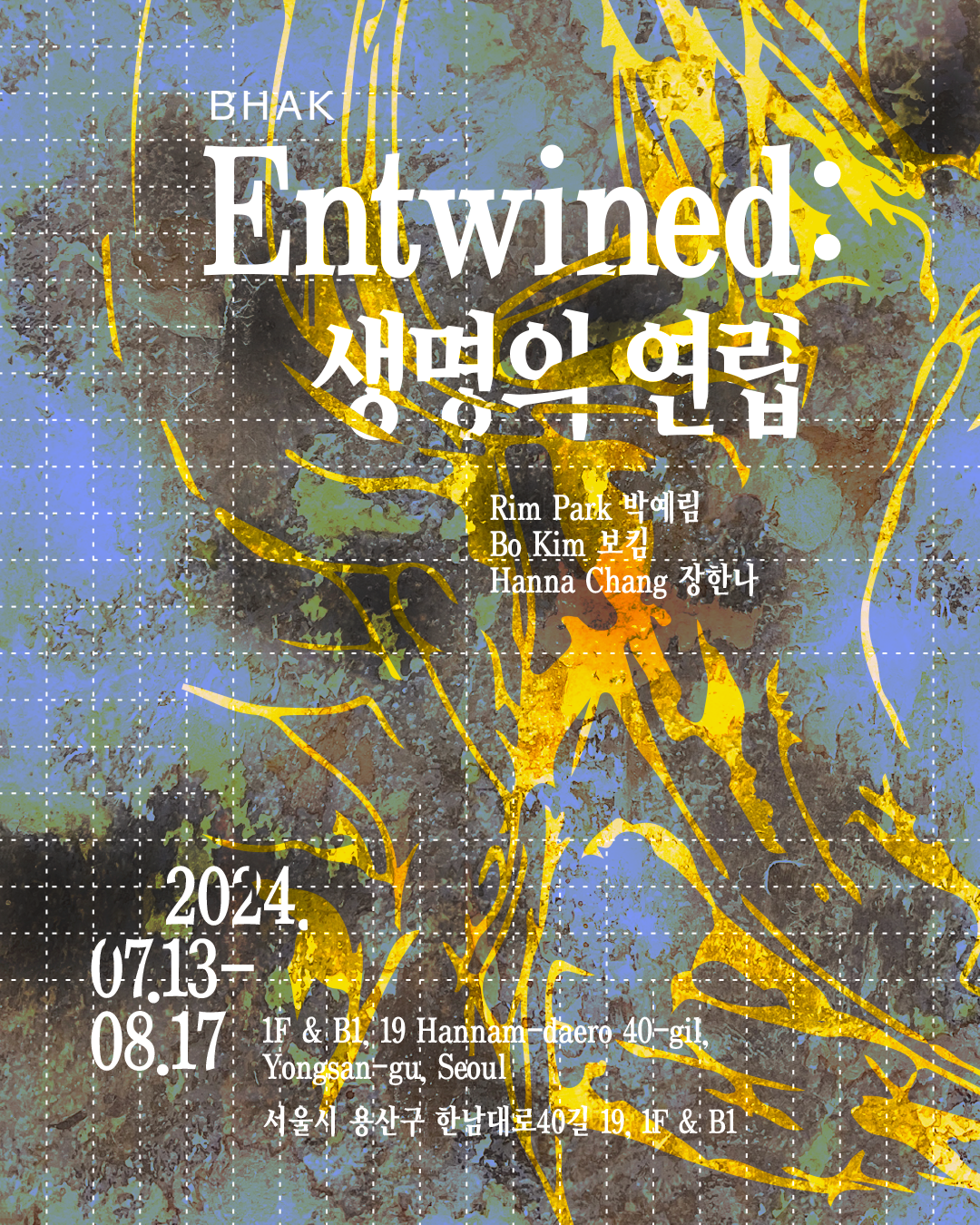
The exhibition 《Entwined: The Living Nature》 premised on the idea that all living things and artifacts, both created and destroyed, have been inextricably intertwined with humans from the past to the present. “Entwined” in the exhibition’s title refers to the intricate intertwining of life forms throughout history. The subsequent phrase, “The Living Nature” suggests the fact that the various life forms created everywhere, whether willingly or unwillingly, are both independent entities and have a relational inevitability that supports each other. Through the medium of various beings in the created world, including humans, Rim Park, Bo Kim, and Hanna Chang focus on imagining and sensing certain archetypes of life and other forms of life that can be derived from them.
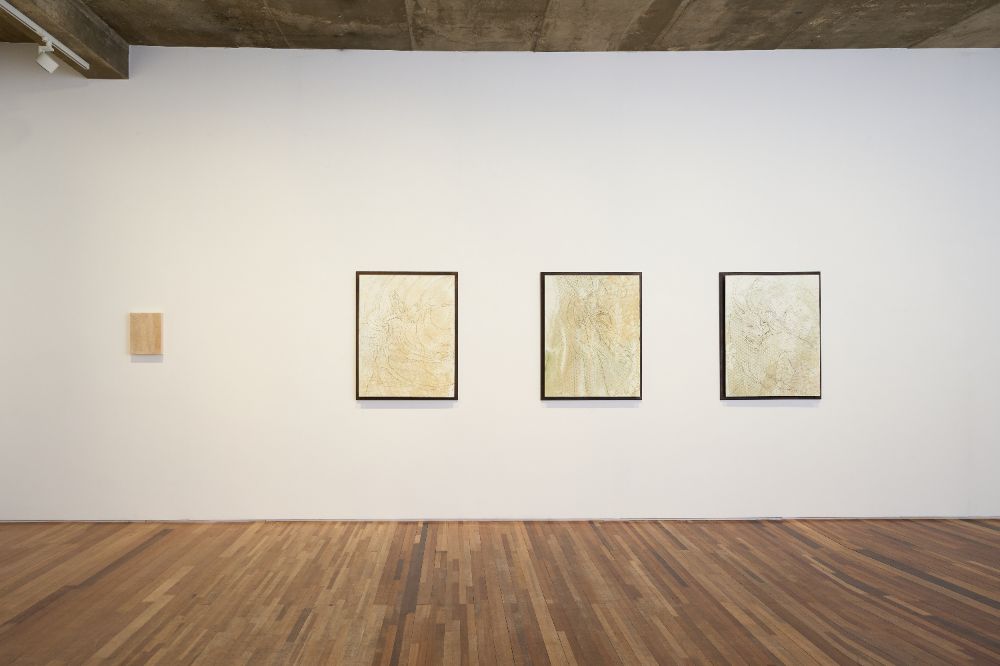
It can be seen as an attempt to look at the various beings in our lives and the relationships between them from an ambiguous and fundamental perspective, and as a prologue to this attempt, we will first look at the work of Rim Park. Through her mythological imagination, Rim observes the relationality between humans and other species. Rim’s work begins with field trips to various primeval forests around the world. After exploring the surreal spaces of untouched primeval forests, Rim imagines what would have happened if someone were present in such spaces. In this process, Rim observes fragments of plants and animals under a microscope, references science and biology books, as well as literary elements such as mythology and comics.
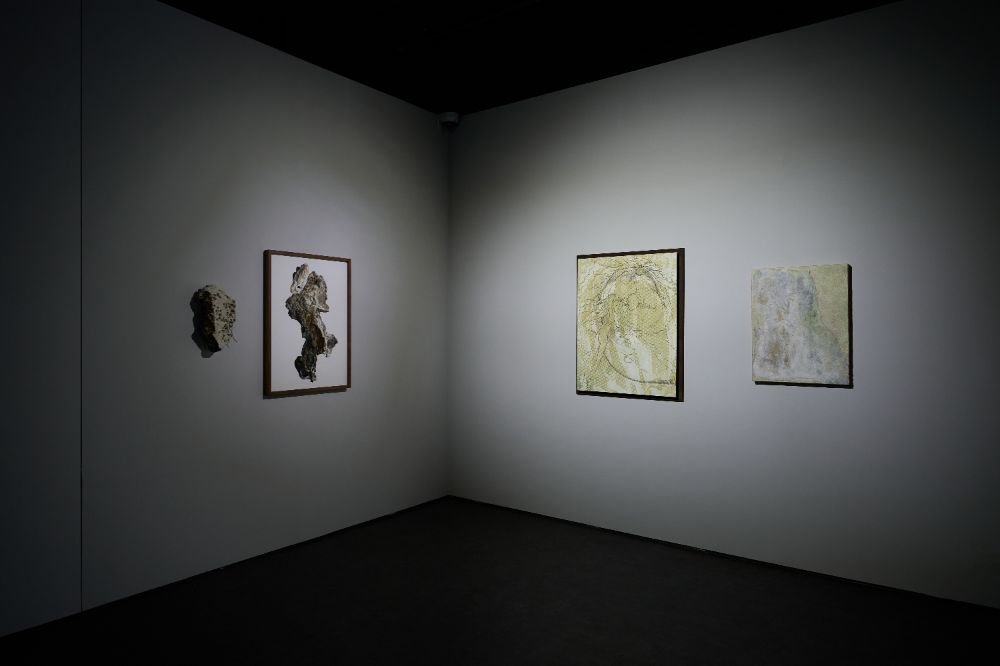
In this exhibition, Rim’s work is set in a world where all living species have disappeared and only traces of them remain. The work captures traces of species such as animal bones and shells, and a figure appears among the traces. This figure symbolizes humanity, the last of the creatures to survive. The naked figure symbolizing humans does not convey any words, expressions, or sounds, yet it exudes a calm and harmonious atmosphere, perhaps due to the physical contact between the traces of biological species and humans in the work.
In Rim’s work, humans in their final moments sit in weightlessness, using giant bones as benches, while in another, they bury their faces in the fragments of remaining species and attempt to kiss. Lastly, in the work displayed downstairs, the last of humanity closes its eyes in prayer and gently touching pupils depicted as a giant portal. These scenes prompt viewers to imagine the relationships that humans and other species have built in the same space and time, relying on and interacting with each other.
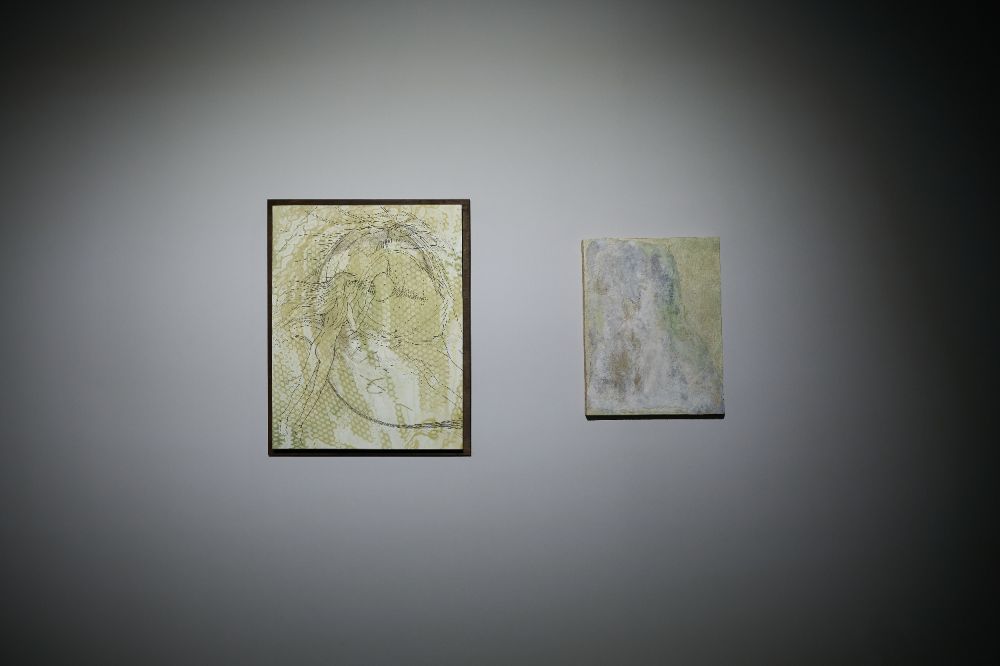
In this way, Rim’s work depicts humans and other biological species in the intersection of life and death as beings with a life force that can eventually harmonize and permeate each other. Could such mythical imagination be possible in reality? In response to this, we will now delve into Bo Kim's work, which explores relationships between humans, as well as between humans and nature through the lens of temporality. Bo Kim studies the mutable nature of life, using nature as a medium. Building on this exploration, her work in the current exhibition explore the disparity of humanity and nature in a narrative of human destiny.
Bo Kim writes, "In my eyes, my parents always seemed principled, reliable, and strong like trees. But now, I notice the wrinkles on their faces. While I understand that it's part of nature's cycle for trees to lose their leaves and stand with bare branches swaying in the wind, I never thought my parents, my trees, would ever sway. I believed they would always remain as lush, green trees in a dense forest." This reflection encapsulates the essence of Bo Kim’s series, My Tree, which delves into the finite nature of human existence. By closely examining the aging process of her parents, Bo’s intimate stories resonate beyond her individual experience, embodying a universal narrative. Although the passage of time and human aging might appear as mere elements of the natural order, accepting this reality with grace often proves to be a profound challenge.
Bo Kim’s work portrays the historical relationships between parents and children, inviting viewers to reflect on the profound and enduring nature of cosmic time that transcends personal connections. As part of this exploration, the series Aging depicts the passage of time through the wrinkles on her parents' faces, portraying them as an abstract form resembling the grain of aged wood. In From a Pair, September 1993, Bo metaphorically portrays the entwined existence of parents and children as two trees fused together, symbolizing a community of life. Thus, Bo then gains insights, observes emotions, and comprehends the principles of life that are not easily accepted.
Therefore, the works of both Rim Park and Bo Kim reveal that while each being's destiny and timeline are unique and relative, they are intrinsically interconnected and interdependent. Hanna Chang's work vividly illustrates these entwined qualities and relationships among life forms through the tangible manifestations of living beings.
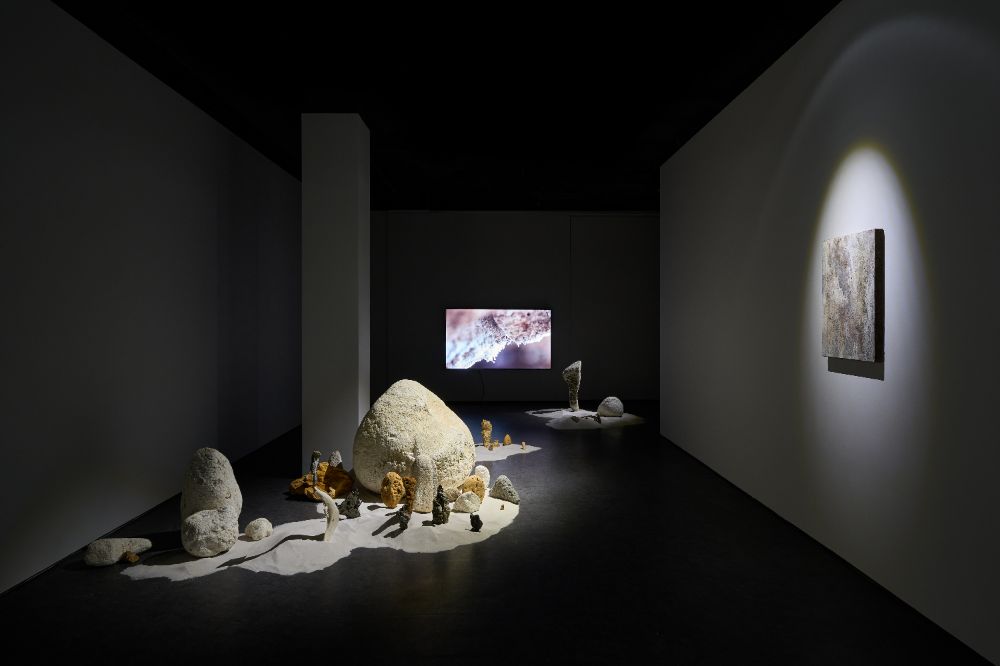
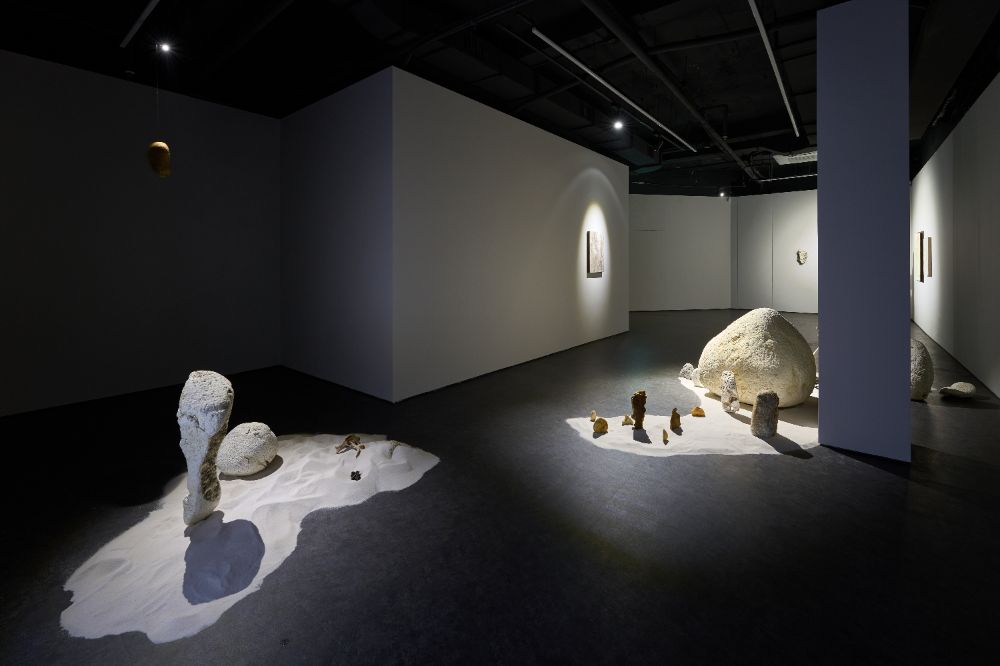
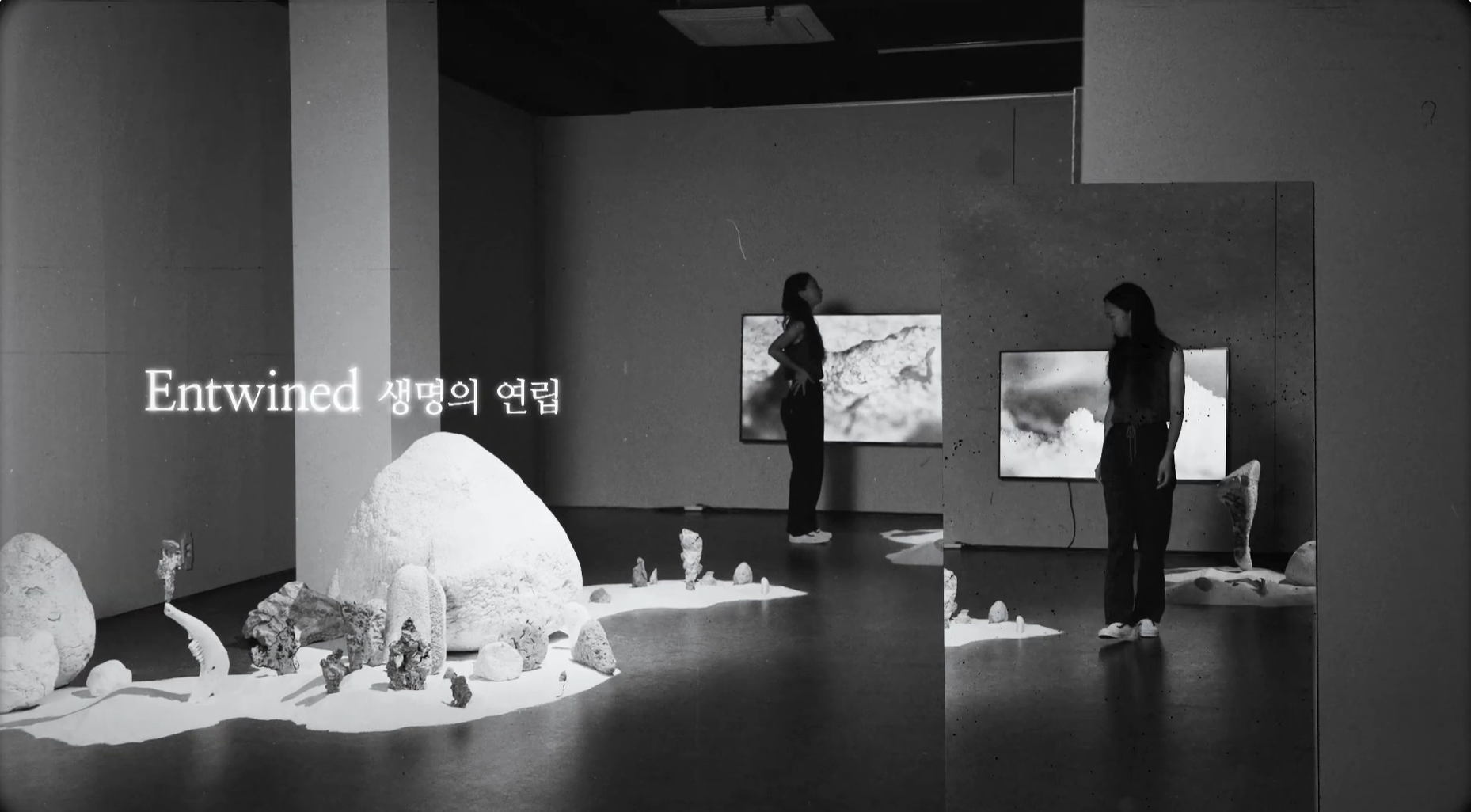
Hanna’s work is a project based on collecting and researching, rather than making new things. In 2017, Hanna discovered mysterious objects at the offshore of Ulsan: a mass of Styrofoam and plastic scraps in the shape of a rock. Since then, Hanna has traveled to Jeju Island, Incheon, Yangyang, Daebudo Island, Busan, and the Han River, collecting more than 1,000 pieces of Styrofoam used and discarded by humans, and giving them the name ‘New Rock’.
The shape and color of New Rock varies depending on the color and shape of the original plastic. So, New Rock is not the first shape of plastic or Styrofoam created by humans. Due to natural weathering, they resemble actual rocks to the extent that they are difficult to distinguish from them. Notably, New Rock not only mimic nature visually but also embody its essence. For instance, New Rocks that have become habitats for limpets, where plants have anchored their roots, and that have become homes for ants.
Formerly human-made artifacts, New Rock now exist as natural entities serving nature's purposes. Hanna considers these objects evolved organisms with renewed vitality and functionality, hence naming them New Rock. This paradoxical vitality of New Rock demonstrates their ability to assimilate and thrive amid environmental encounters, awakening an appreciation for the intricate and subtle ways in which nature creates and operates.
The artworks of Rim Park, Bo Kim, and Hanna Chang examined thus far offer micro and macro perspectives on the relationships surrounding humans and various life forms. Through everyday interactions with smartphones or occasional glimpses of starlight, we unknowingly deepen and expand our connections with the world. In this process, encountering our external world—rich with intersections spanning past, present, and future—leads to a newfound reflection on the boundless environments that surround humanity. This exhibition encourages viewers to understand the horizons of time spent with ourselves and various entities, fostering an awareness of diverse connections, alliances, and emergences within these realms.