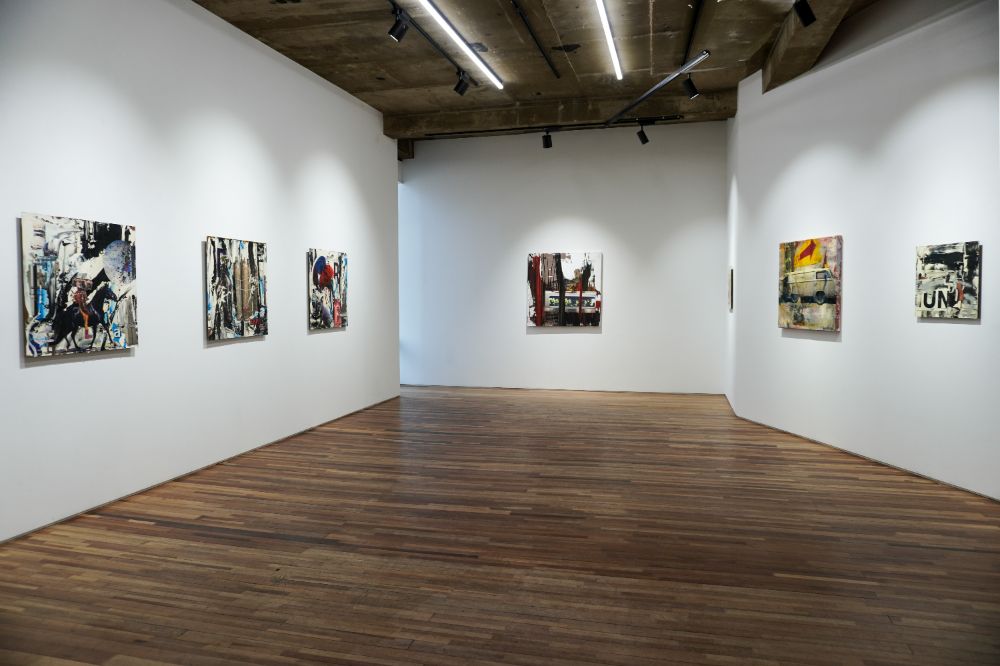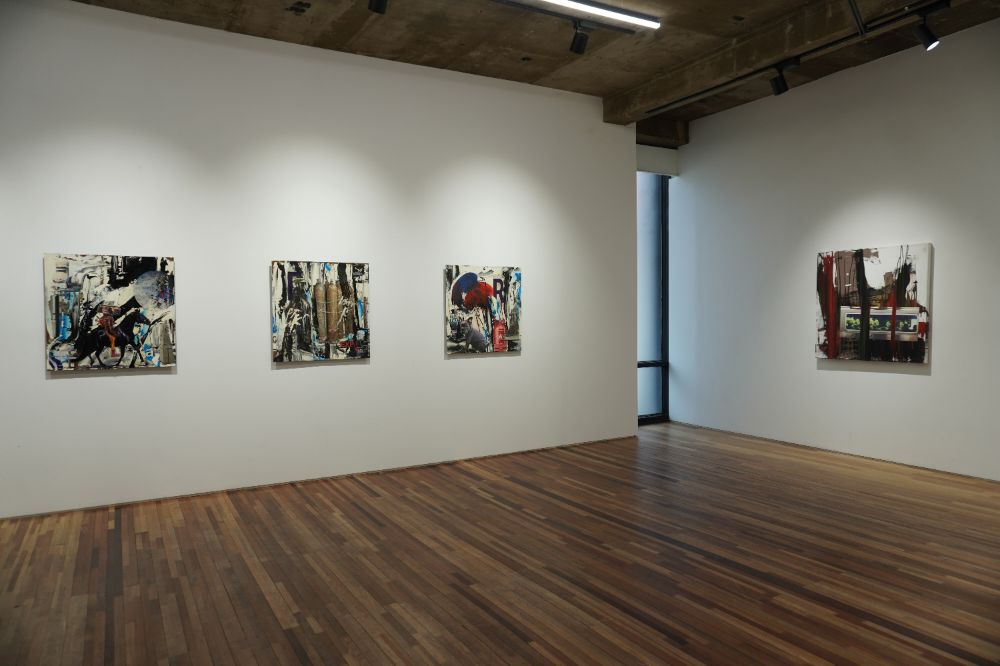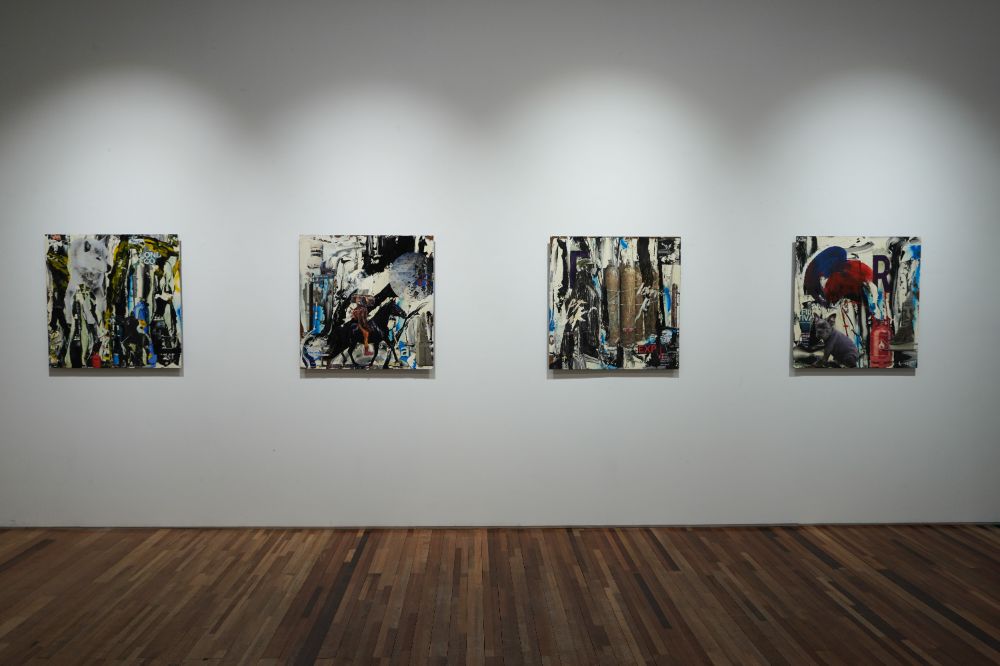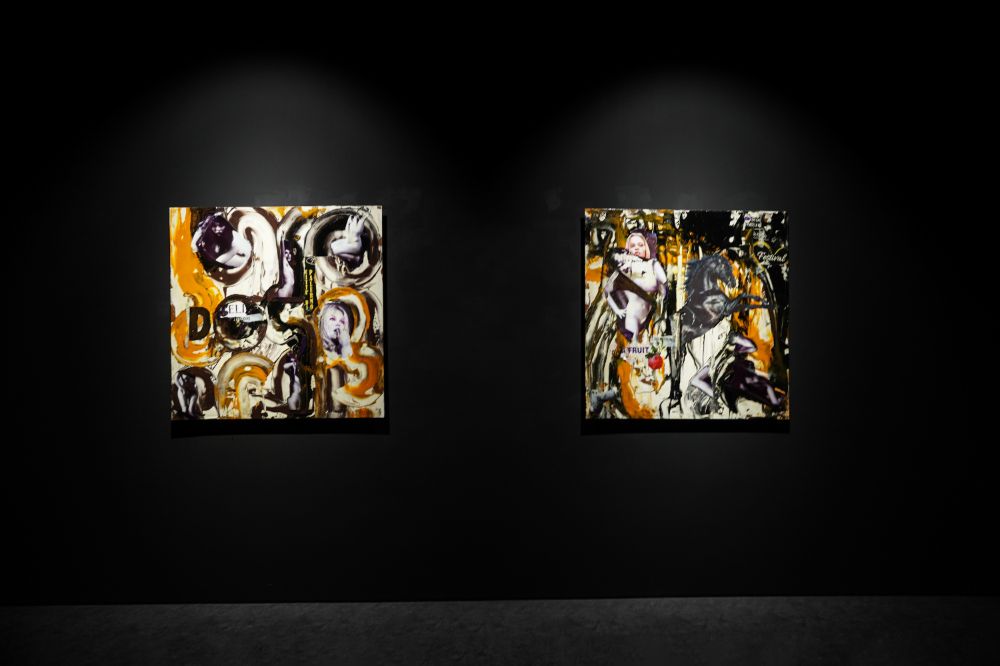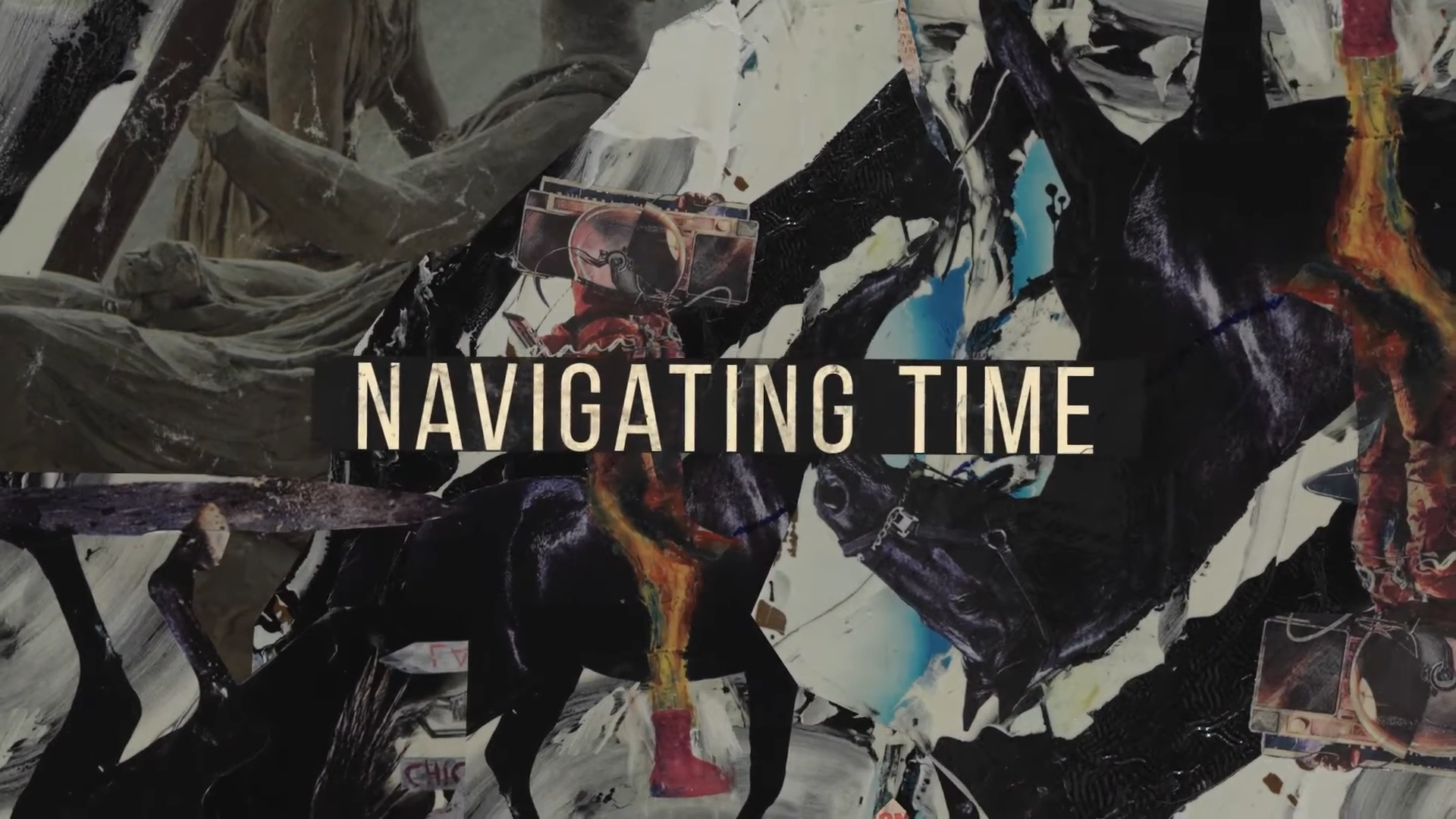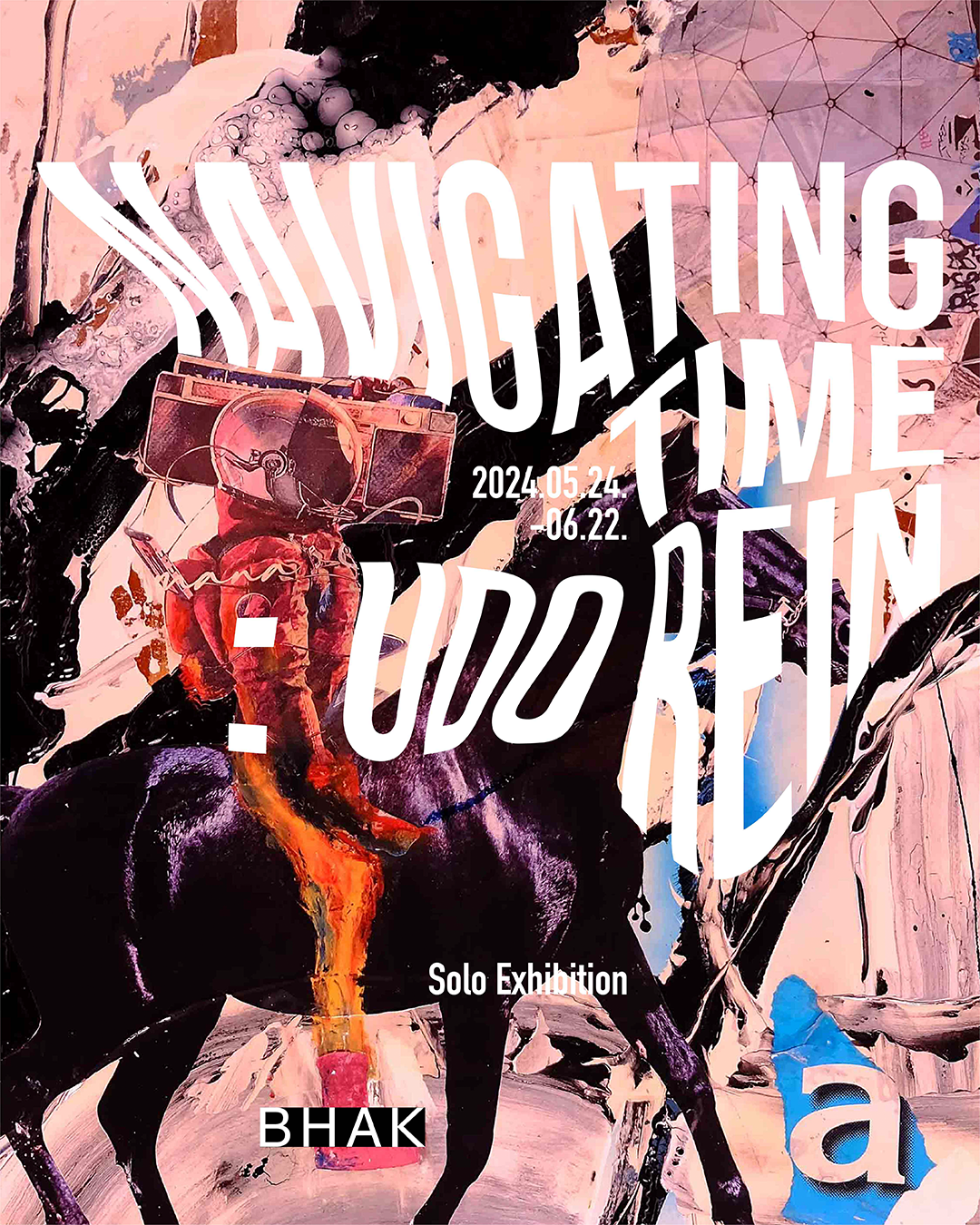
Udo Rein (b.1960) combines heterogeneous and diverse images of figures, animals, objects, and texts into his works, harmonizing them on the canvas. Each image does not merely represent a specific subject. The scenes were created by Udo by printing and cutting images captured during his travels to different countries and pasting them onto panels. This collage technique traces back to Udo's career in the field of photography and film during the 1980s and 1990s in the United States before he fully engaged in Fine art, and was also influenced by Pop Art artists.
During that time, he engaged in various collaborations such as shooting, editing, and stage setup while conducting video production projects in Miami and LA. While staying in the United States, he was influenced by the collage style popularized by pioneers of pop art and street art in New York City, such as Robert Rauschenberg (1925-2008), Richard Hamilton (1922-2011), and Ray Johnson (1927-1995). He was influenced not only by the video works they produced at that time but also by the collage form they popularized, which he later incorporated into his own painting genre.
In the early 20th century, pioneers like Pablo Picasso and Georges Braque first experimented with collage as a function of aes-thetic composition by combining various print media into their paintings. By the mid-20th century, colleges had evolved and diversified further. This evolution included the emergence of photomontage, which utilized photography, and collage forms that aimed to expose social tragedies and absurdities and satirize them. Additionally, Pop Art artists began using collages to showcase images from popular consumer culture in their works. In art history, the collage technique not only reflected social and cultural phenomena but also contributed to the popularization and expansion of art's boundaries by incorporating familiar images from news, advertising, consumer products, and comics into artistic subjects.
The materials and purposes utilized in collage vary depending on the time period and the artist, but there is a fundamental purpose to the collage technique: by adhering heterogeneous materials and media to the canvas, it aims to evoke a chain reaction of images in the viewer. In Udo's work, both the formative characteristics inherent in the collage technique and its tendency to critique societal realities are evident. What is particularly noteworthy is the underlying concept of 'temporality' as understood by the artist. In this background, the exhibition "Navigating Time: Udo Rein" proposes a journey for viewers to follow as they explore, capture, and understand Udo's exploration of time. It invites viewers to examine Udo's works, which exist in the form of time, and to contemplate the various ways in which time manifests within them.
Udo's works, which visualize multilayered time, are closely intertwined with his method of painting. Using a camera, Udo captures scenes that are difficult to perceive with the naked eye within fleeting moments, recording them as video footage. From this footage, he extracts specific scenes as still frame images and then applies paint onto the canvas alongside these images. Thus, the sequential images that were once played out in the video now exist as fragmented images. Furthermore, the form of time depicted in his works does not follow a linear flow from past to present to future but rather presents a state of time where past and present are simultaneously mixed. The past is constantly reconstructed into the present moment, and a sense of temporality that cannot be precisely perceived by our consciousness permeates Udo's entire body of work.
This concept of time is not merely confined to the technical aspects of Udo's work; it effectively carries the core content that he seeks to show and convey in his artworks. The collaged images in his works serve as a record of the situations he witnessed and the emotions he felt during his visits to various countries, where he observed grim societal phenomena such as ecological crises, war, and poverty. In this context, Udo has described his works as fragments of memory and visual diaries.
When Udo interprets his records back into artworks, he expands beyond his autobiographical memories of the time and situations. However, this doesn't mean that his works should be interpreted strictly within the framework of societal discourse. While Udo acknowledges art's potential for societal critique, he takes a negative stance toward its use as a tool for political agitation or propaganda. His intention is not to use art as a medium to denounce specific events or propose solutions but rather to encourage a pure approach to the complex realities of individuals and society, whether known or unknown to us. Therefore, Udo's works strategically draw attention to the opacity of the images as a means to transform personal and societal narratives into universal ones and further position them within the realm of art.
In Udo's works, various images and texts exist in the form of records, yet they are perceived as highly ambiguous images. This enigmatic form of artwork can be seen as placing the utmost responsibility and role of viewing and reading onto the viewers. This is because, within Udo's works, viewers can freely explore the creative traces and social critiques amidst the collaged time and images, experiencing an open field of interpretation. As such, the moment Udo's works are newly experienced and interpreted within the subjective realm of the viewer, his perspective extends to that of the spectator, allowing his works to be discussed and experienced from a universal standpoint of both individuals and society.
It seems that we are currently passing through the most glamorous and prosperous era compared to the past. However, beneath this surface lies the deep-seated shadows of realistic and societal conflicts and pains that have always existed. Udo neither pessimistically asserts nor idealistically agrees with our lives and history. While acknowledging the proposition that the nature of art pursues beauty, as an artist, he considers it his fundamental purpose to hope for and express a beautiful future, thereby aligning himself with the pursuit of beauty through art.
This exhibition serves as a site where Udo's artistic endeavors to achieve his purpose are revealed. His journey, navigating through time as a voyager, and keenly observing the shadows cast across various corners of the world, can be interpreted as a time of deep and extensive exploration of human nature, and it is a time that expands the vision of viewing our lives in a more beautiful light.
Written by│Sohee Lim (BHAK Curator)