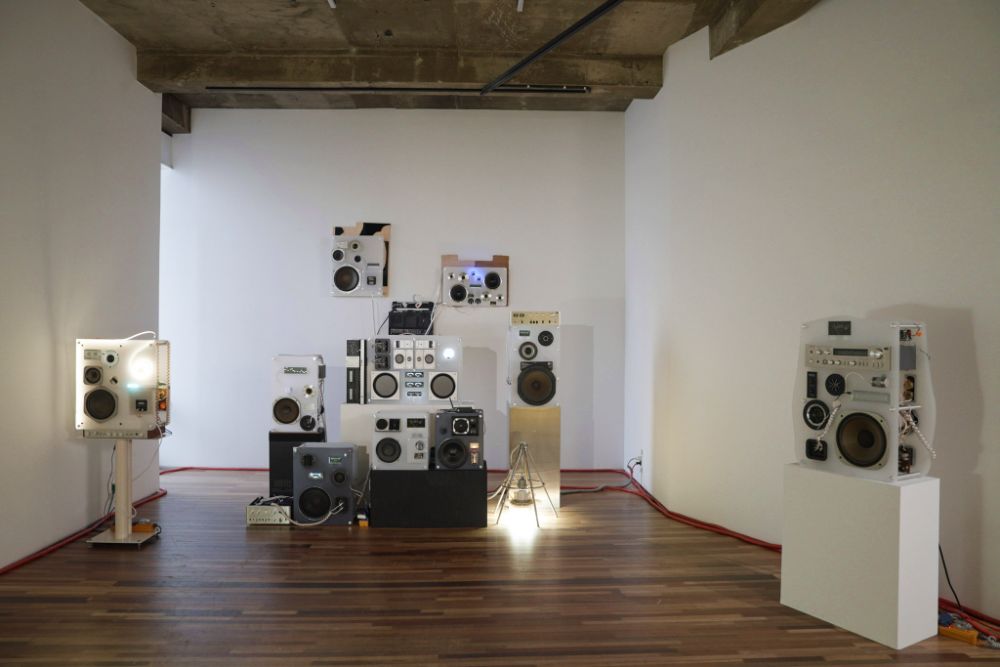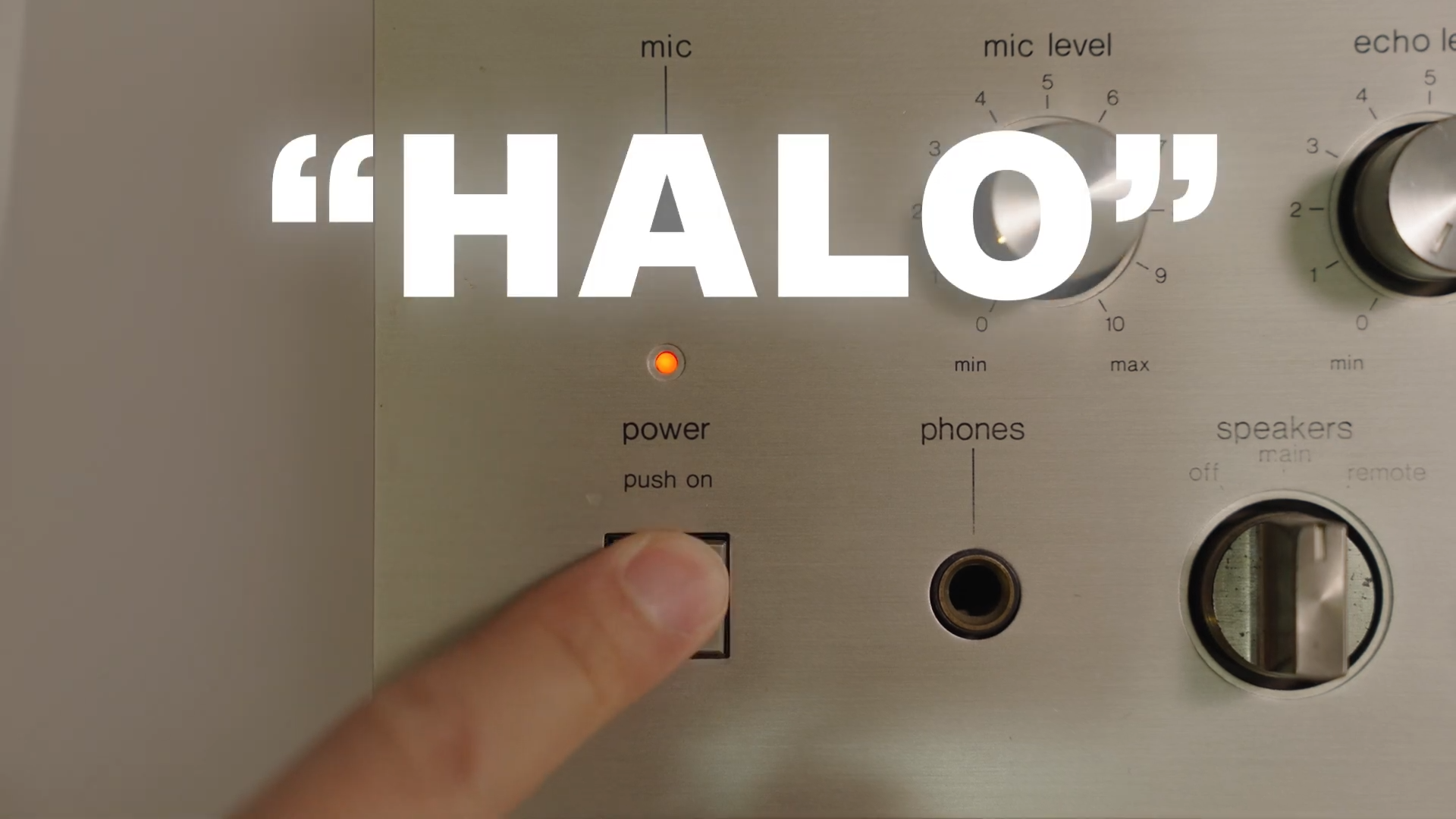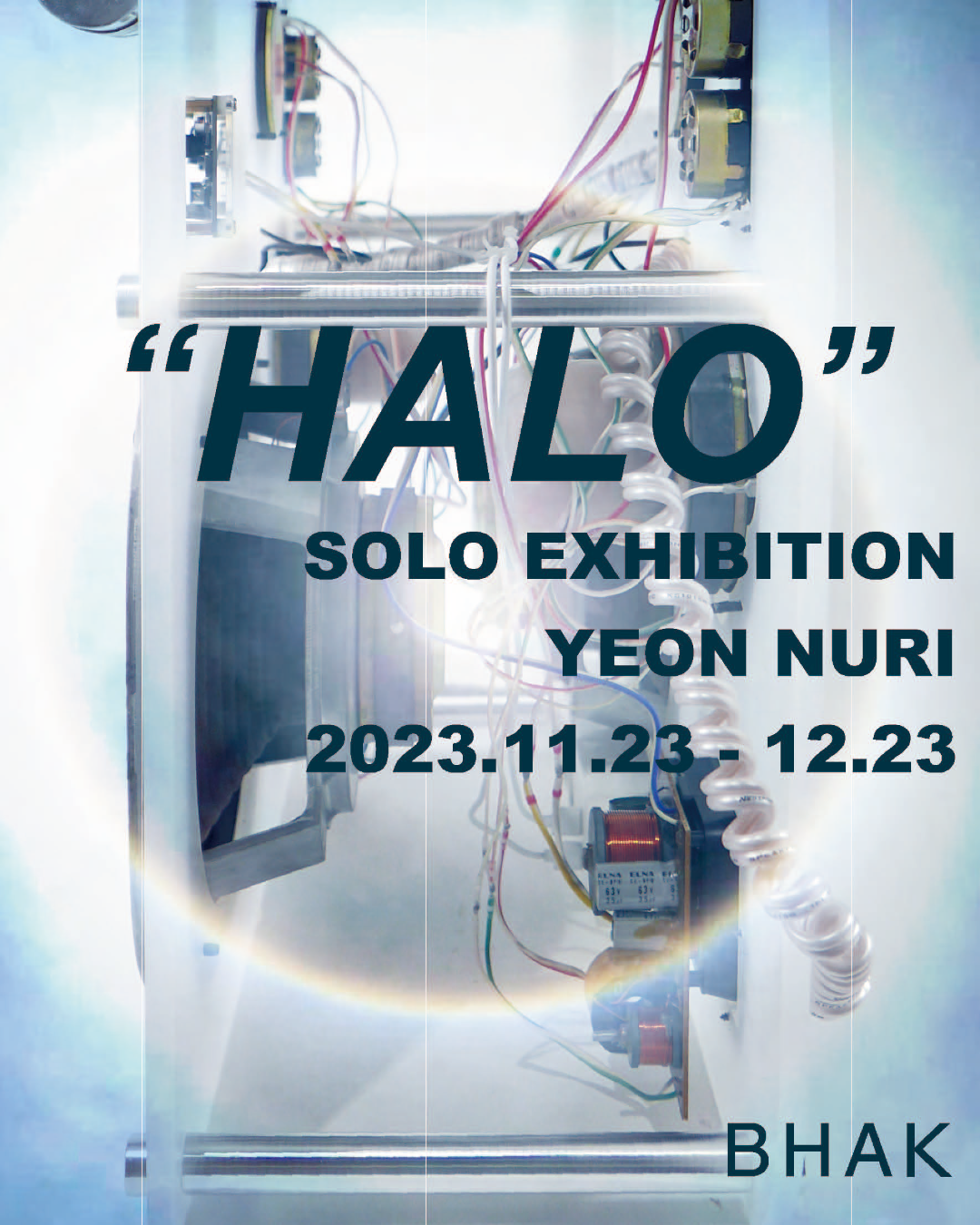
Yeon Nuri (b. 1984)'s solo exhibition, "Halo," questions the forms of art appreciation that have uncon-sciously solidified within the relationships among the artwork, exhibition space, and the viewer. In response to the raised question, he introduces the concept of "Recombinant sound system."
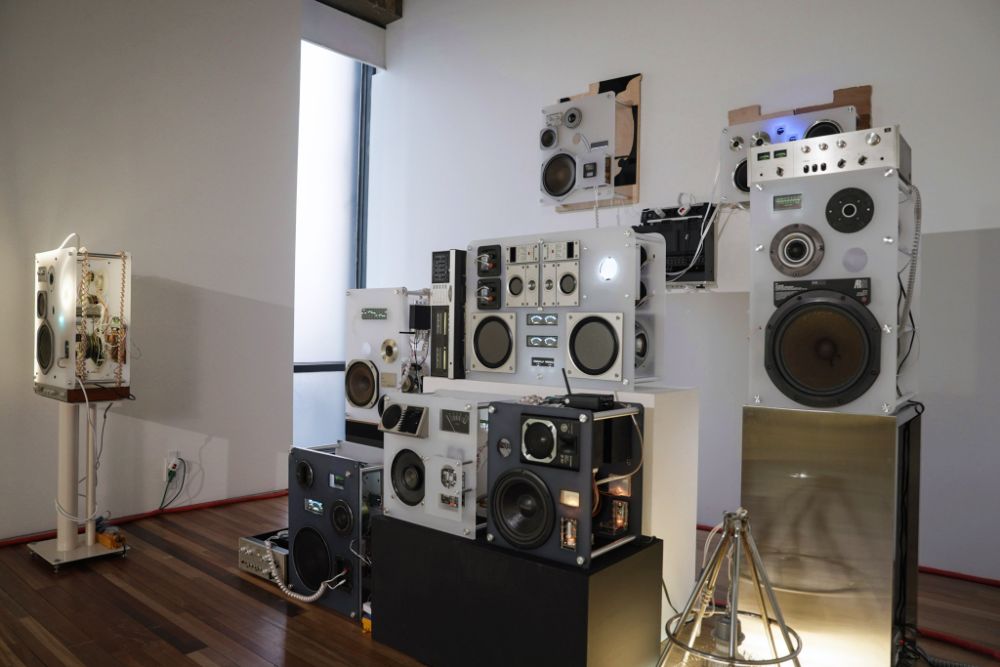
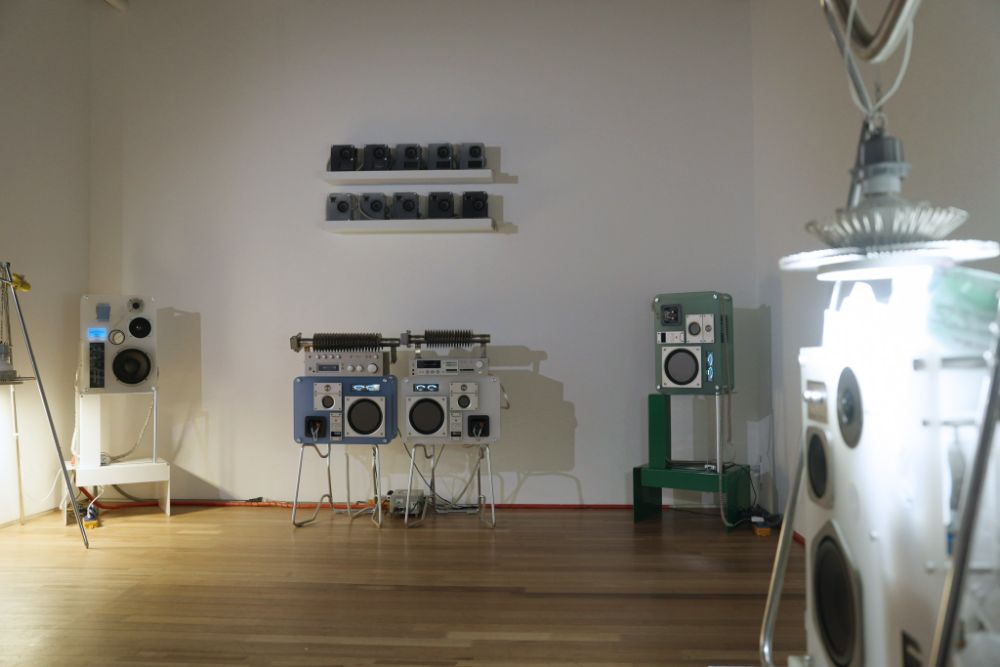
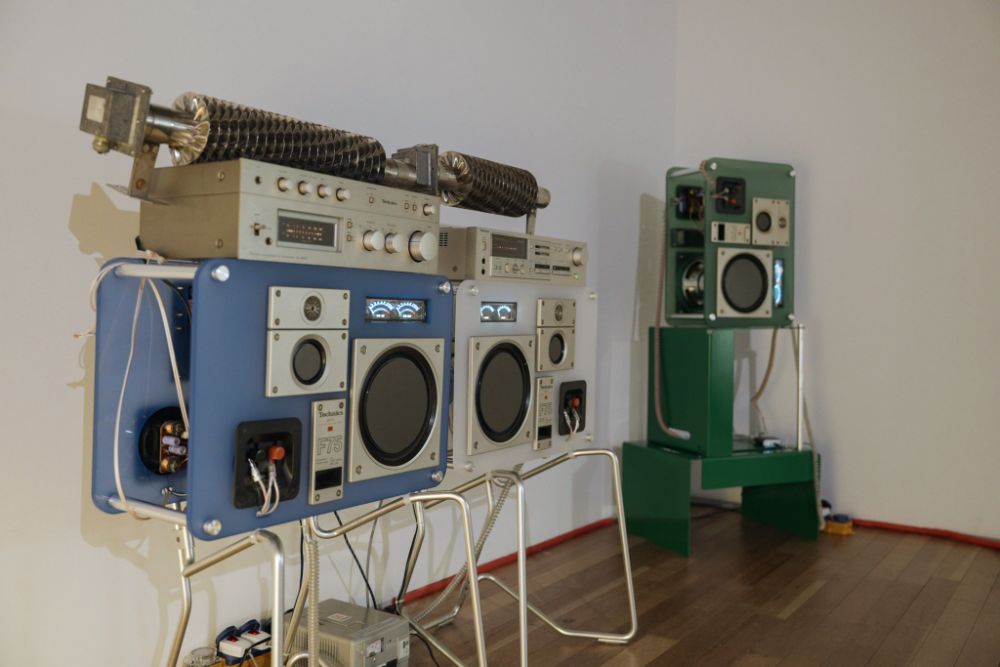
Yeon Nuri's displayed works at the exhibition space do not have appearances that easily conform to a single genre. At first glance, his works, resembling installations or sculptures, are created by the artist dismantling audio speakers and related components collected from various places over an extended period. The artist calls them "Recombinant sound systems," which combine components from different times and shapes. They are strategically arranged to allow the audience experience exploring the work from the right to left, front to back, and inside and outside while listening music.
Each system, composed of various accessories, combines essential devices for producing sound with various visual elements that induce aesthetic pleasure. Consequently, Yeon Nuri's sound systems differ in nature from commercially produced devices targeted at specific user needs or trends. This is because the focus is not just on the quality of sound desired for music appreciation or the sophisticated form of speakers, but rather on stimulating the imagination and curiosity of both the creator and the user. The emphasis is on the possibilities of shape and sound inherent in the device itself.
For example, each device is a combination of vintage speakers produced in different eras and materials acquired in present time. The visual elements demonstrating the movement of sound are also intriguing. In the center of the exhibition, "NEW TERRITORIES_DIAMOND" features a ferrofluid in the shape of a slime monster that creates various shapes in response to the sound waves. Additionally, at the bottom of "NEW TERRITORIES_DEVELOPED," a vacuum tube level meter that emits light according to the intensity of the sound is inserted, allowing the audience to interactively perceive the form of sound. Thus, Yeon Nuri's sound systems extend beyond a simple auditory experience; touching and feeling the devices while listening to the sound they produce allows for a multisensory approach.
The exhibition provides two ways for the audience to appreciate music: curated music selected by the artist and the gallery, as well as the option for the audience to directly enjoy the music of their choice. This setup challenges the conventional idea that considers music as an auditory medium and fine art as a visual form of art, allowing for an exploration of artistic appreciation based on individual tastes and sensibilities. Consequently, the boundaries between the work and the viewer become blurred, and the completion of art is ultimately achieved through mutual interaction.
Yeon Nuri's work, proposing an active engagement of the audience, momentarily diverges from the familiar environment and algorithm-dependent ways of streaming music, allowing for a different approach in appreciating art based on today's situations and thoughts. The exhibition demonstrates that the artwork and the audience coexist as individual beings yet form a single connecting link, offering a time to vividly experience art that was previously situated in the background of daily life, now at the very center.