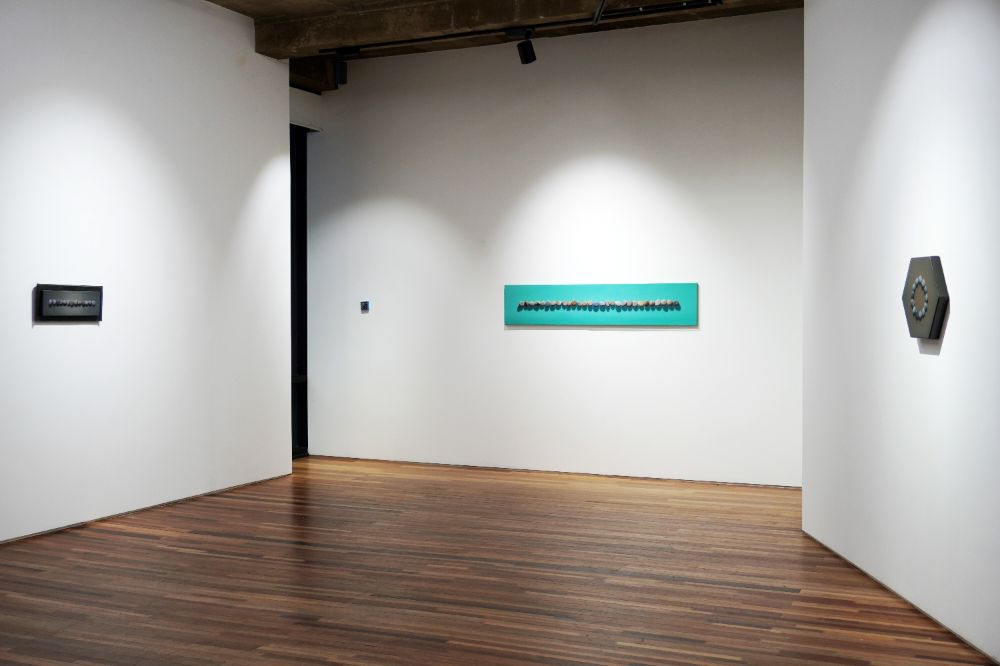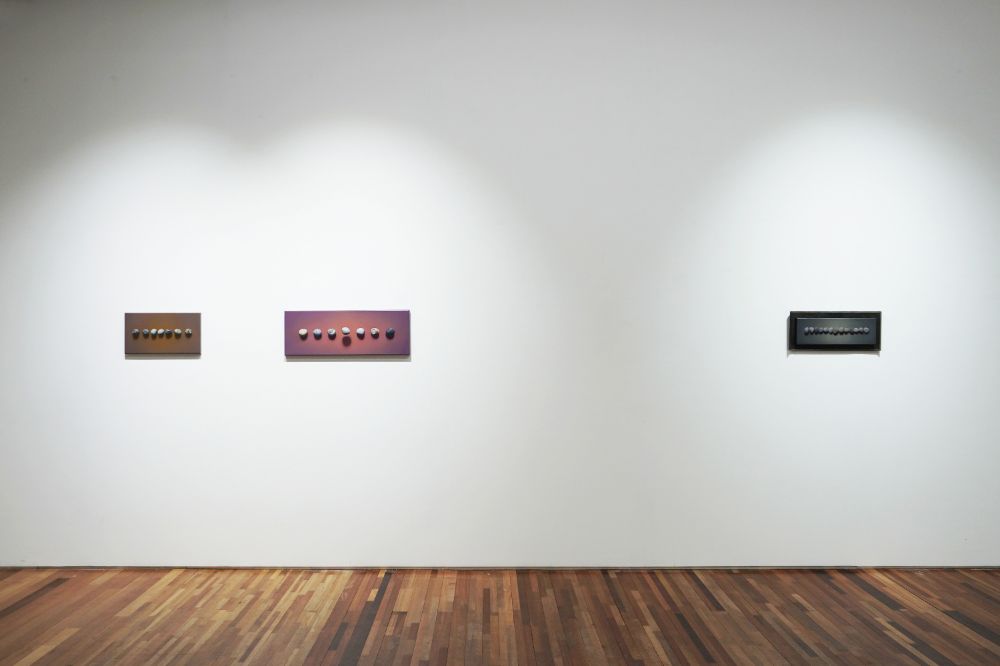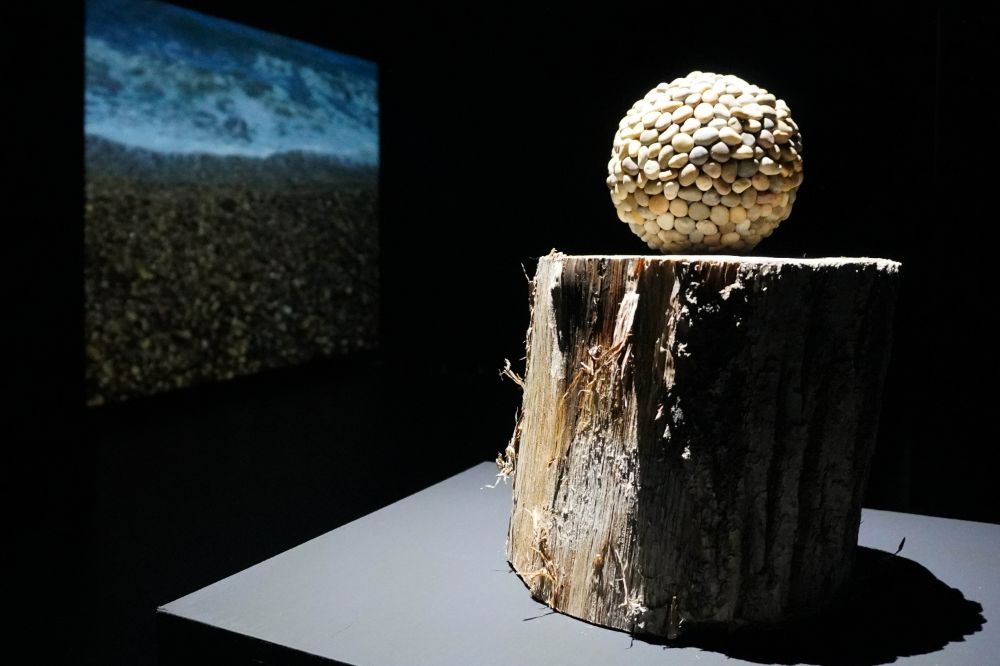
Kim Se-Joong (b. 1977) is an artist who combines ancient sculptures and antiques with the backdrop of the sea and sky to create a surrealism that is portrayed in a realistic manner. He has been focusing on pebbles as a subject of his artwork since the early days of his career, evolving his philosophy in art. In this exhibition, "Calling: Existence and Harmony," we aim to closely examine Kim Se-Joong's series of pebble works that encapsulate his artistic philosophy.
In daily life, pebbles are among the natural elements that are easily found. But it is rare for someone to actively seek places to observe them. Kim Se-Joong's decision to use pebbles as a material in his art traces back to a unique and serendipitous encounter. In 1995, after taking a university entrance exam, he visited the Kongdol Pebble Beach on Baengnyeong Island and came across a beach full of pebbles. As he observed the small stones being swept ashore by the waves, creating sounds and movements, he was drawn to the voices and gestures of the pebbles.
Similar to the sound of leaves rustling in the wind or the change of shape and speed of clouds based on temperature, pebbles on the beach respond to external stimuli by making sounds and movements. They collide and roll against each other, producing both large and small sounds in sync with the intensity of the waves. Kim Se-Joong mentioned that he perceived the sounds of these pebbles as human voices. He also perceived the sounds as reminiscent of the internality of his youth, when he was an introvert but had the courage to attempt communication through art.
An example of this is seen in the work Between eternity and moment, where pebbles are arranged in a circular formation. The way pebbles are placed across from each other symbolizes communication, visualizing the event where the pebbles seemed to speak to the artist. This illustrates that Kim Se-Joong's pebbles are not lifeless matter but carry a special significance as living beings in nature.
Kim Se-Joong regards himself and the pebbles as the same organisms. Biologically, humans and natural elements do not have the same root. However, from an aesthetic perspective, Kim Se-Joong felt a sense of kinship with the beach pebbles. This experience made him realize that the appearance of the pebbles is not directed toward an indefinite audience but toward himself. Thus, Kim Se-Joong's pebbles are considered a representation of an experiential event that goes beyond the elemental realm, serving as a symbol of the artist.
To understand this mystical experience with the pebbles, Kim Se-Joong later traveled to various beaches in Baengnyeong Island, as well as domestic and international coastlines, observing and collecting pebbles that guided his heart. Interestingly, he sought out the beaches not on clear, sunny days but during rain or typhoon warnings. In these extreme, wild, and threatening moments when nature unleashes its fury, Kim Se-Joong, as if embodying the pebbles, immersed himself in the experience of nature. This aspect of his work demonstrates that Kim Se-Joong's vision of nature is not merely contemplative but highly engaged with the experiential realm.
In this process, the artist found that pebbles eroded by storms resembled bare, vulnerable human bodies. Amidst the fear of currents and sand splashing and whirling in all directions, he realized the dualistic nature of fragile yet energetic humans. Kim Se-Joong associated himself with the pebbles, and as a result of these existential encounters with natural materials, his pebbles transcended the realm of matter and became a manifestation of the immaterial spirit.
Furthermore, the artist visualizes the theme of temporality, depicting the moment when finite humanity connects with infinite nature through the single theme of pebbles. Kim Se-Joong delivers his philosophy of traversing the dimension of time by placing the pebbles from the beach onto the canvas and seeking to transcend the boundaries of painting and enter the realm of different dimensionality of time. Here, the artist seeks to establish a connection with the viewer through the hyper-realistic style of painting. The meticulous and smooth surface of the pebbles, where brushstrokes are barely visible, exudes a powerful attraction. This effect is not aimed at evoking fleeting emotions or thoughts but instead encourages prolonged contemplation, conveying the beautiful and joyful moments that Kim Se-Joong experienced over long periods.
In contrast to his previous works where various compositions of natural elements were painted on the canvas, the pebble series put the pebbles in the spotlight like portraits and embodies multiple meanings and roles. The aesthetic experience that emerged through the mystical and exceptional encounter with nature, which approached like human voices and gestures, completely permeated the artist himself and his art. This exhibition, "Calling: Existence and Harmony," is Kim Se-Joong's genuine request for the beautiful and joyful perceptual world (“Calling”) he felt with his entire being to be shared with others, as it traces the events surrounding the pebbles that exist as the beginning and results of his art.