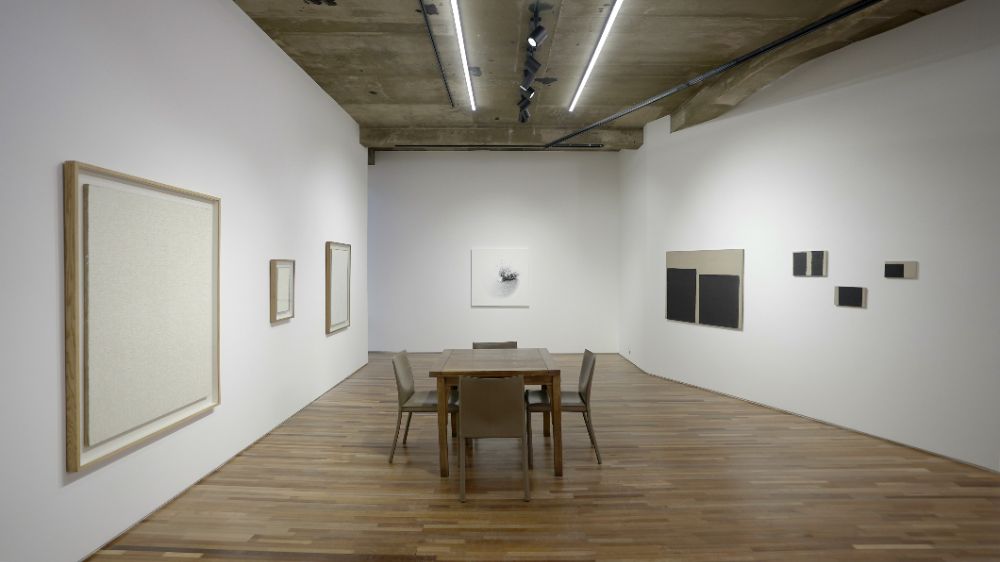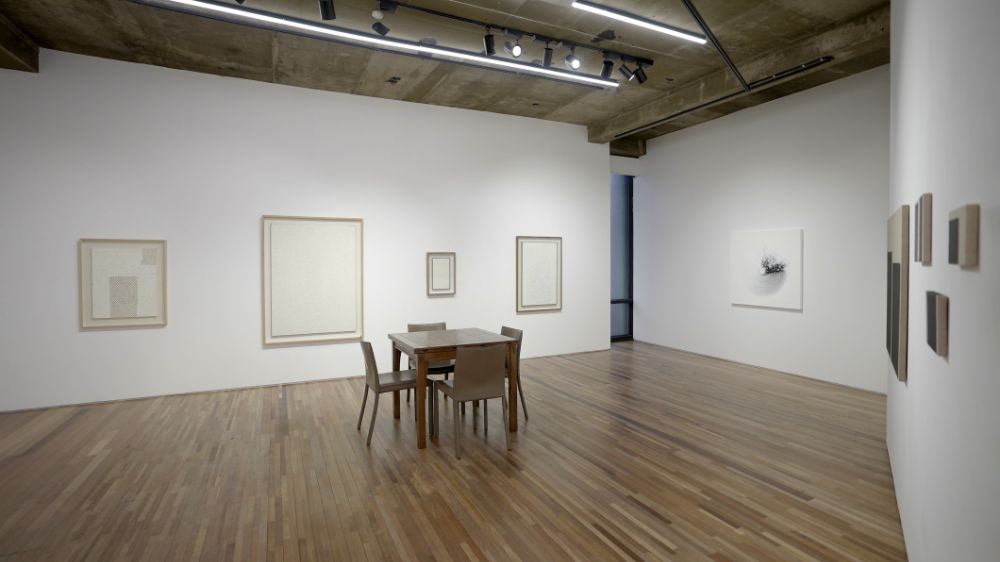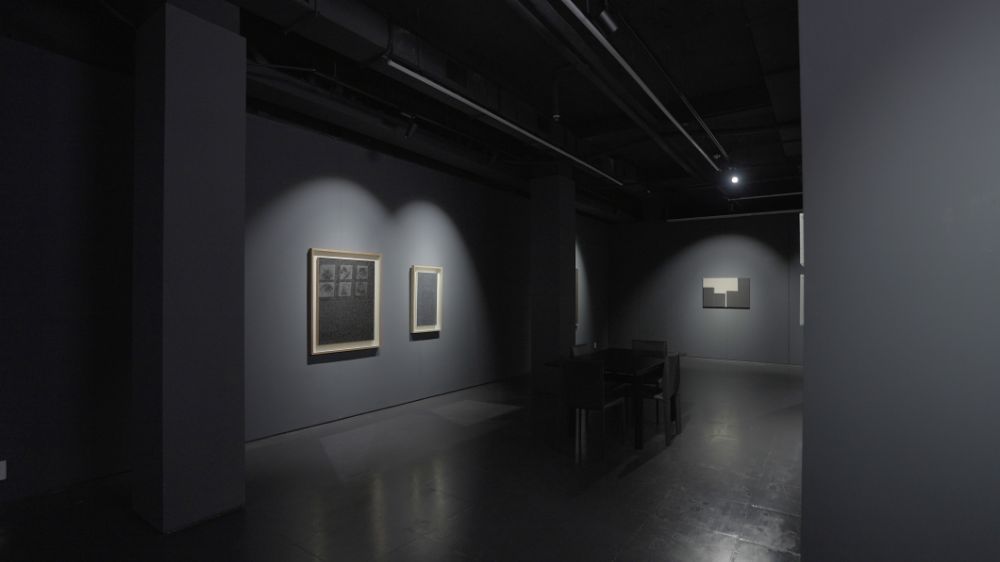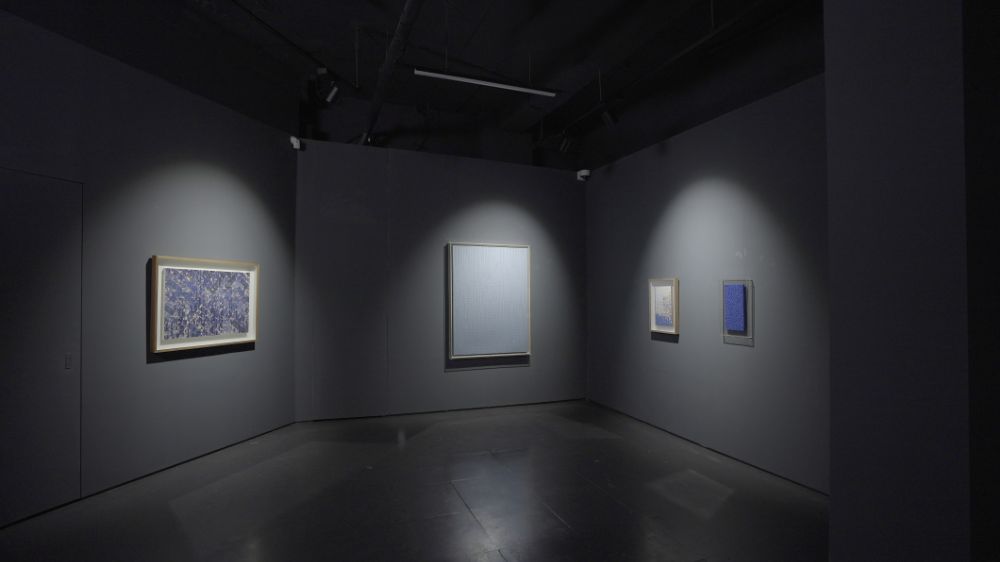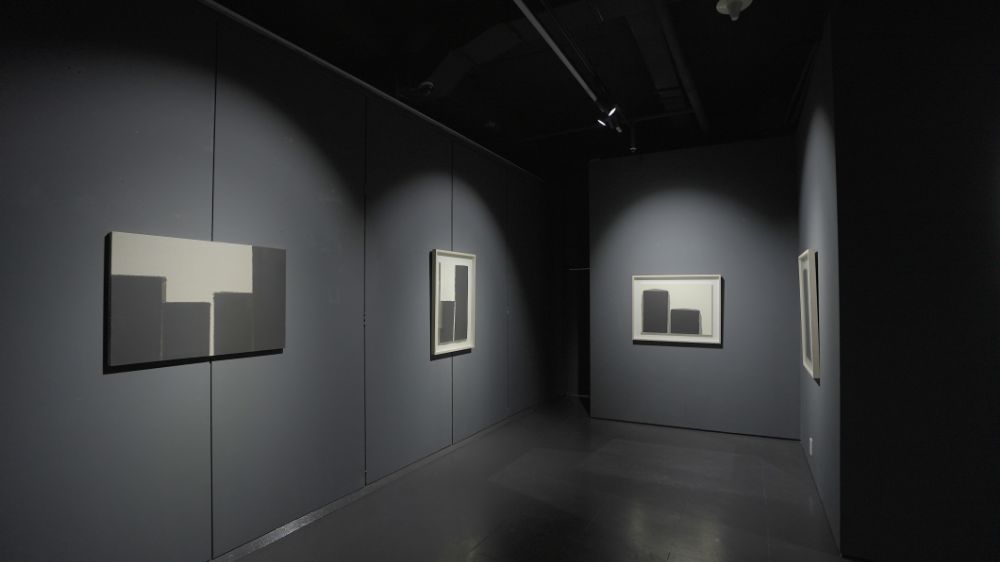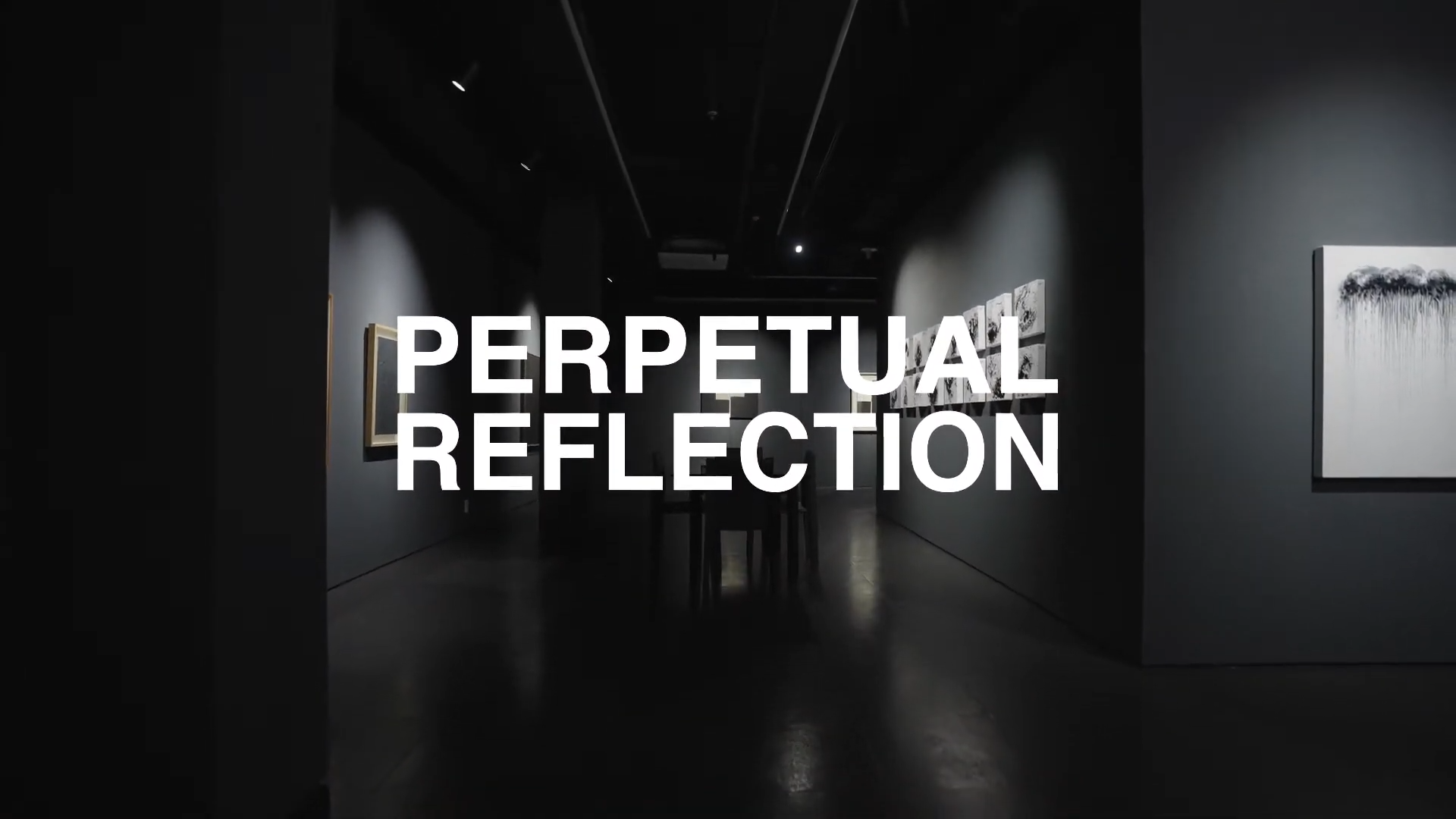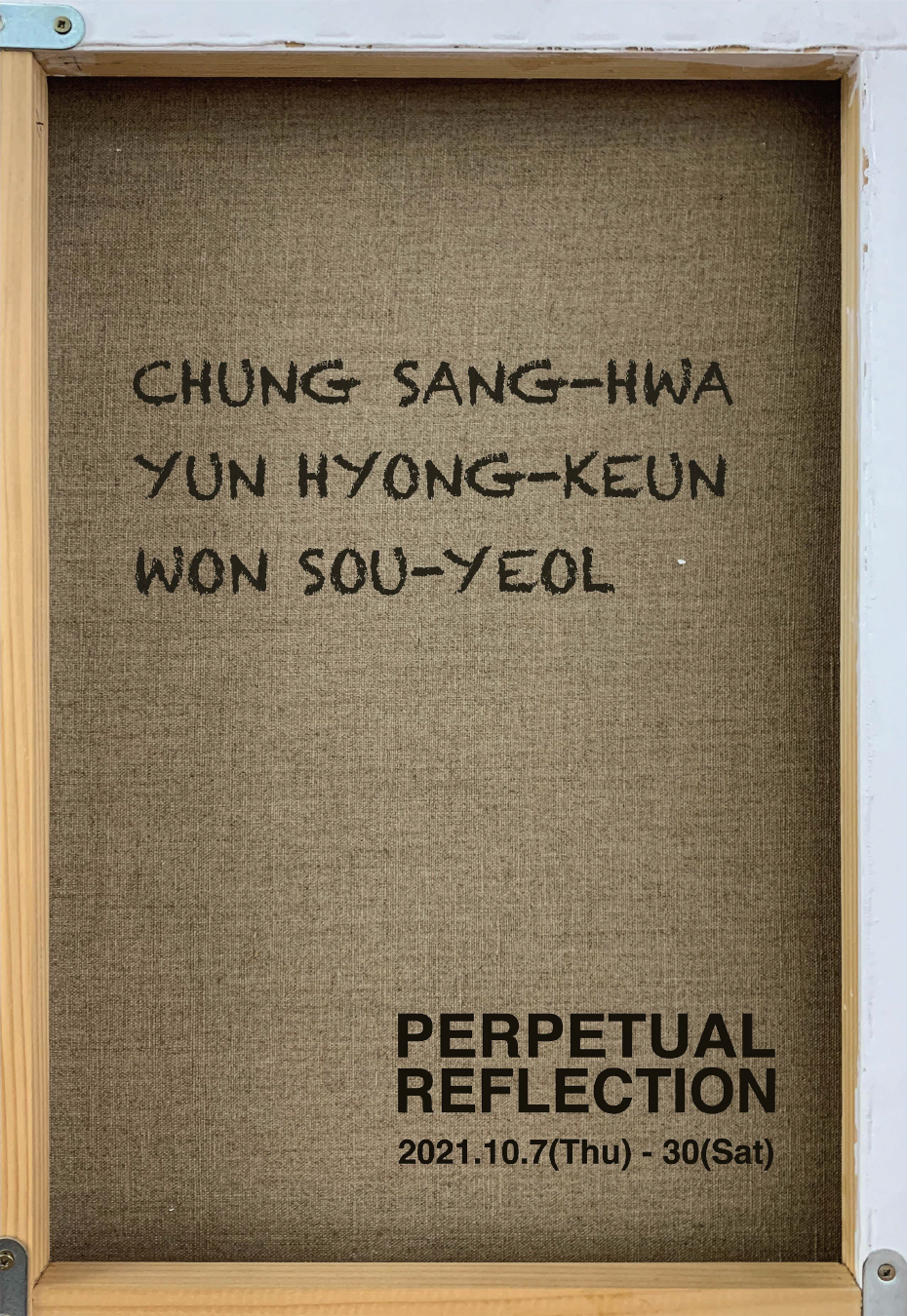
What do great artists have in common? BHAK presents Chung Sang-hwa, Yun Hyong-keun, and Won Sou-yeol. 《Perpetual Reflection》 unravels the story of the three different contemporary art masters who constantly reflected oneself to create their own compositions through oriental spirit.
When looking at Chung Sang-hwa(b. 1932)’s dense grid painting, one can feel a deep sense of rhythm. After exploring works in the experimental style of Informel and matière effect, his works lead the audience to the climax by gradually evoking emotions. Chung, also heavily involved in Dansaekhwa movement, cannot be simply contained in the term ‘Dansaekhwa’. In the mid-1950s, Chung was influenced by American abstract expressionism and Europe’s art informel on the direction of the Korean Informalism movement. Then, he shifted towards monochrome abstract painting and reached his signature technique using repetitive and systematic process of “tearing off” and “filling in” the work on canvas. The continuous change throughout his career shows his depth of philosophical disposition and his substantial influence on Korean contemporary art scene.
Yun Hyong-keun(1928~2007)‘s thick layers of palette builds profound silence and tension, closely interacting with the audience. Yun is one of the primary artists of the Dansaekhwa movement. Yun distinctively established his artistic world and named it the “gate to heaven and earth”. The mixture of blue and umber represents the meeting of heaven and earth, creating an unfathomable tone of black. Yun reflected the ‘oriental idealism’ of accepting and becoming part of nature by repetitively brushing down the color of heaven and earth. He was also heavily influenced by the nineteenth century literary artist Chusa Kim Jeong-hui, who wore out 1,000 brushes to master his own style of calligraphy. Yun’s repeated gestures and assertive lines deliver a still but extensive spiritual experience.
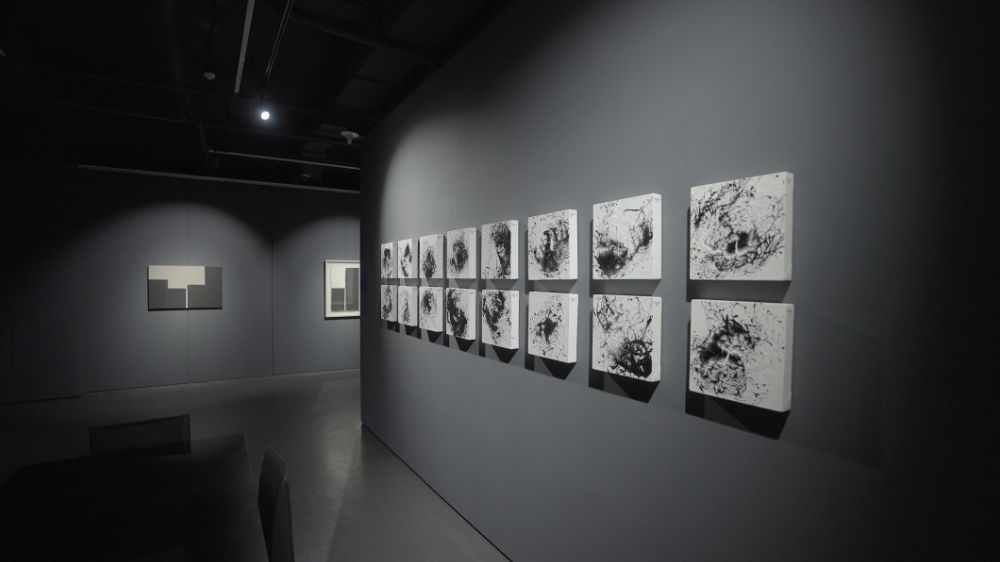
Won Sou-yeol(b. 1949)’s forceful black brushstrokes against the white surface create a solemn atmosphere. Her concentration on each brushstroke is unimaginable as she has once said, “I was painting and when I looked up to check the time, three years have passed.” Each stroke is uniquely splattered as if the brush and the painter have become one to carry out ordered yet disordered composition on a thick paste of white paint. The splatters of emotions reflect the 108 defilements that disturb one from reaching nirvana. The tension created by contradicting desires and emotions of extremes allows the viewers to immerse into the painting. One can empathize with the artist’s nomadic life as a foreigner in France, building insight into Buddhist dogma, oriental sentiment, and nostalgia of her hometown, Jeju.
Group exhibition of Chung Sang-hwa, Yun Hyong-keun, and Won Sou-yeol features a solid structure of art piece. The innumerable repetition of practice and reflecting on oneself create a continuous circle of art. The key is consistent and steady effort. The audience is easily attracted to the simplicity of the artwork but the lasting impression is imprinted in one’s mind.